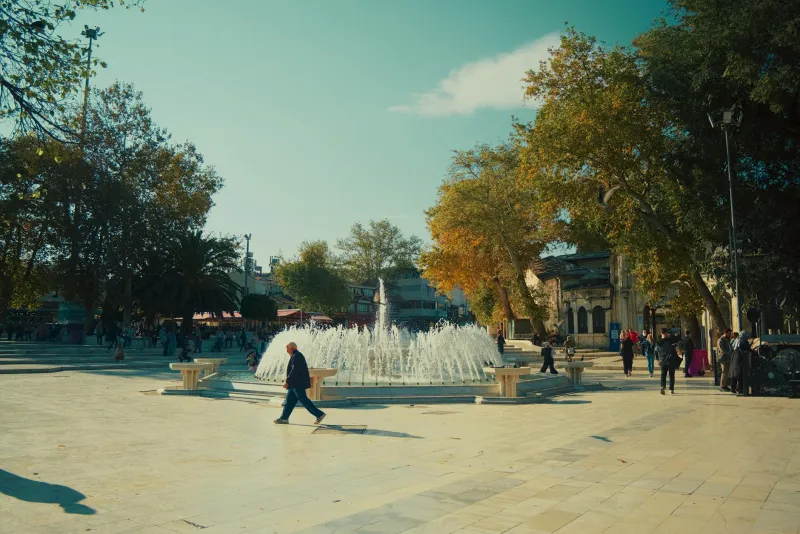
The Student Who Walked Away
In 1923, a promising architecture student named Lawrence Halprin stood at the crossroads that would define his unconventional career. Three years into his studies at Cornell, with professors praising his natural eye for space and form, he made a decision that horrified his family: he dropped out. Not because he was failing, but because the classroom felt too small for the ideas growing in his head.
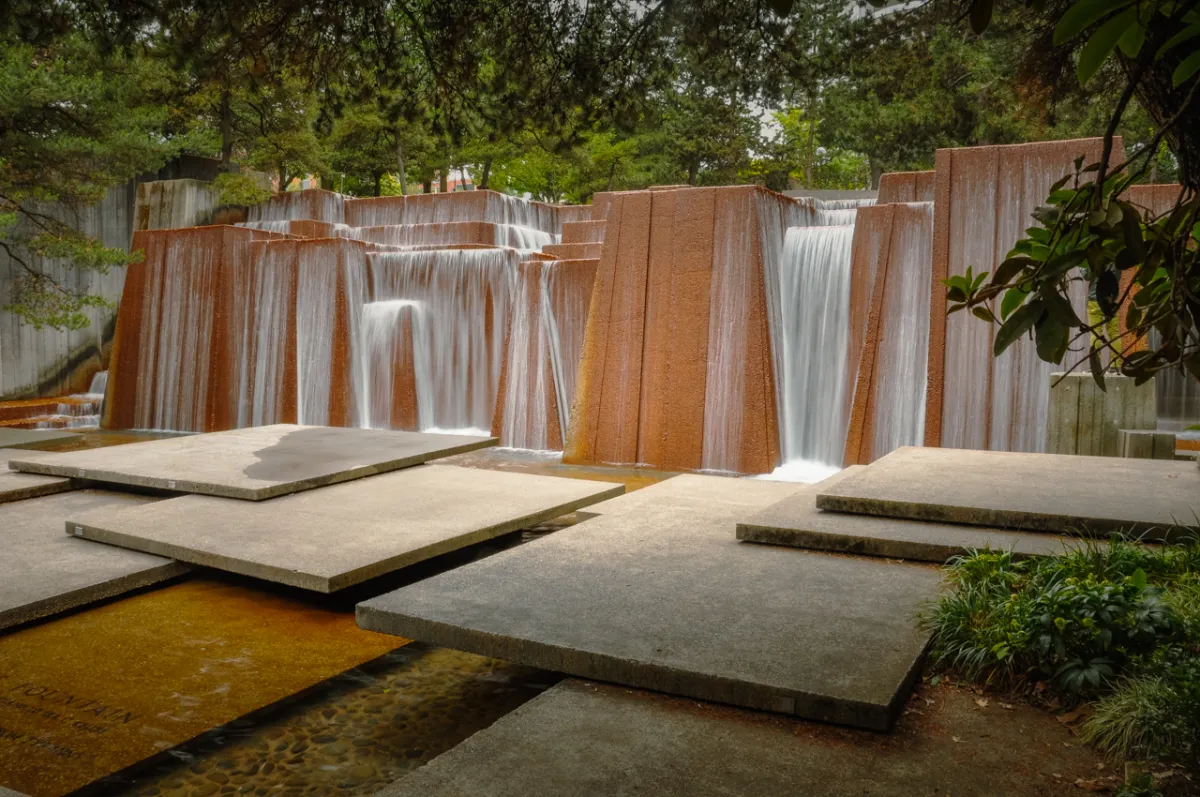 Photo: Lawrence Halprin, via studiopyg.com
While his former classmates buried themselves in textbooks about classical orders and structural engineering, Halprin was learning different lessons. He spent summers working construction crews, watching how buildings actually came together. He sketched constantly—not just buildings, but how people moved through spaces, how children played in parks, how elderly couples found quiet corners to rest.
The Wandering Years
What followed wasn't the dramatic success story his professors might have predicted. Halprin spent the better part of a decade drifting between odd jobs, picking up freelance design work, and slowly building a reputation as someone who understood something most trained architects missed: that great public spaces aren't just about impressive structures, but about how human beings actually live.
His first major break came through pure persistence. The city of Portland needed someone to redesign their struggling downtown plaza. The established firms had submitted predictable proposals—formal gardens, imposing monuments, the kind of spaces that looked impressive in photographs but felt cold to actual visitors. Halprin's proposal was different. He suggested water features where kids could splash, amphitheater-style seating that encouraged conversation, pathways that followed natural foot traffic patterns rather than geometric perfection.
The city council was skeptical. This wasn't the kind of grand civic statement they'd envisioned. But Halprin's presentation included something the others lacked: detailed observations of how people actually used public spaces. He'd spent weeks in Portland's existing parks, noting where crowds gathered, which benches stayed empty, how weather affected foot traffic.
The Science of Human Movement
What Halprin understood, without formal training in urban planning or behavioral psychology, was that successful public spaces work like choreography. People don't move through cities in straight lines or perfect circles. They pause, they gather, they seek shelter, they crave both community and solitude—sometimes within the same ten-minute period.
His Portland plaza became a case study in intuitive design. The water features he'd proposed became the famous Ira Keller Fountain, a cascade of concrete forms that children immediately claimed as a playground and adults discovered as an urban oasis. The amphitheater seating hosted everything from lunch-break concerts to political rallies. The seemingly random pathways turned out to follow exactly the routes people wanted to walk.
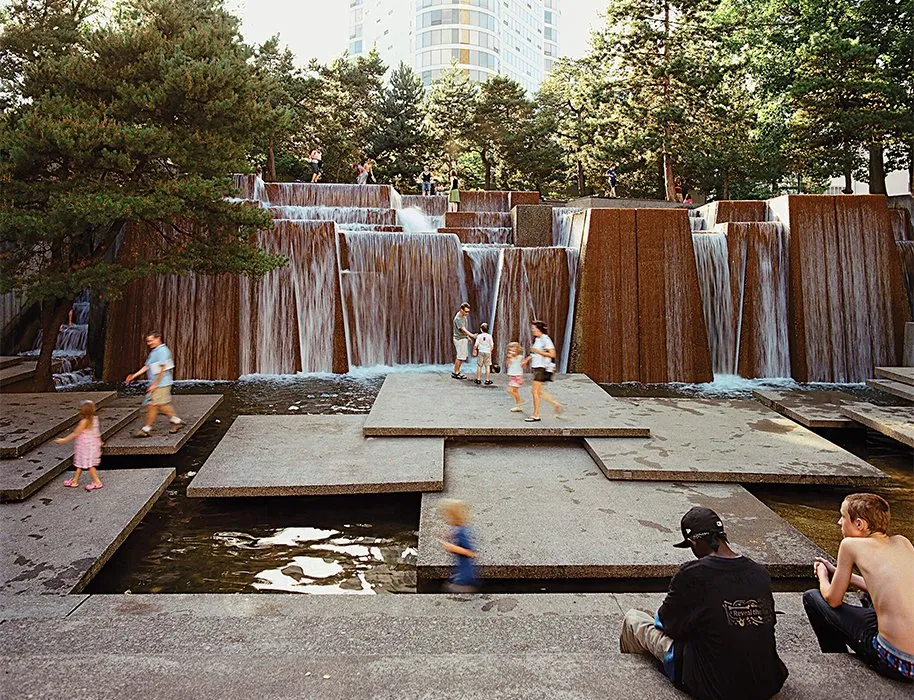 Photo: Ira Keller Fountain, via freight.cargo.site
Word spread through the tight-knit world of civic planning. Here was someone who could create spaces that actually worked, not just spaces that impressed architecture critics.
The Quiet Revolution
Over the next three decades, Halprin's influence spread across America in ways that most people never noticed. He didn't design skyscrapers or monuments that appeared on postcards. Instead, he focused on the everyday spaces where American life actually happened: the plaza outside the local library, the waterfront park where families spent Sunday afternoons, the downtown pedestrian mall that either thrived or died based on how well it understood human behavior.
His approach was revolutionary precisely because it looked so simple. While other designers imposed their vision on spaces, Halprin spent months observing, sketching, and listening. He would sit in coffee shops near potential sites, watching foot traffic patterns. He'd interview maintenance workers, who knew better than anyone which design elements actually worked and which created ongoing problems.
The San Francisco waterfront, Seattle's downtown core, dozens of smaller cities across the country—all bear Halprin's fingerprints, though few visitors realize it. His spaces feel natural, as if they'd always been there, which was exactly the point.
The Teacher Without Credentials
Perhaps most remarkably, Halprin became one of America's most influential design educators despite never finishing his own formal education. His workshops and consulting work trained a generation of planners who carried his human-centered approach into their own projects. He proved that the most important design principles—observation, empathy, patience—couldn't be learned from textbooks.
By the time he died in 2009, Halprin had received every major honor in his field, including recognition from the very institutions whose programs he'd abandoned decades earlier. His legacy wasn't in any single spectacular building, but in the thousands of public spaces across America that work a little better, feel a little more welcoming, and serve their communities a little more thoughtfully because someone took the time to watch how people actually live.
The dropout had taught an entire profession that sometimes the most important education happens when you step outside the classroom and start paying attention to the world around you.