
The Boy Who Couldn't Say His Own Name
Harold McKenzie's childhood in Sedalia, Missouri, was measured in moments of humiliation. Ordering ice cream became an ordeal. Answering the phone was impossible. Even saying "here" during roll call turned his face crimson with effort and shame.
 Photo: Sedalia, Missouri, via www.visitsedaliamo.com
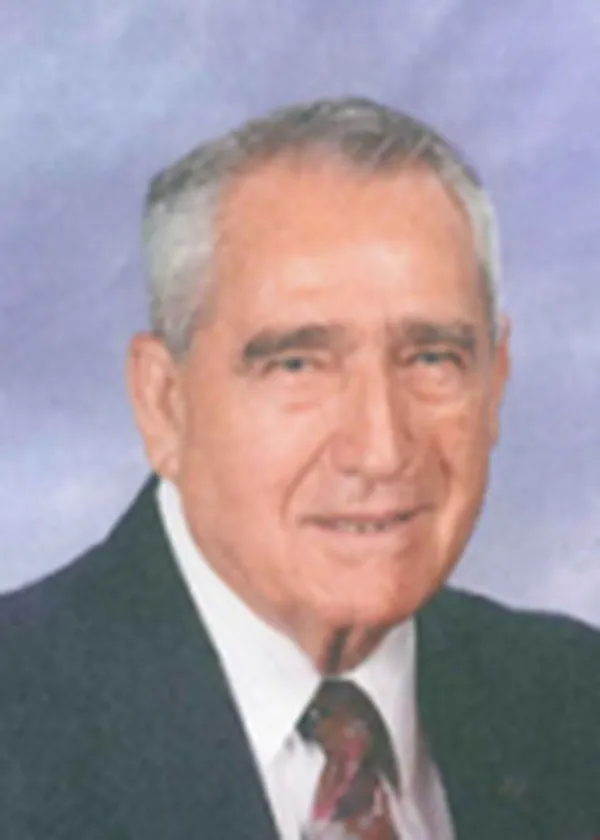 Photo: Harold McKenzie, via cache.legacy.net
By high school, classmates had nicknamed him "Silent Sam." Teachers learned to skip over him during oral presentations. His parents, well-meaning but overwhelmed, suggested he consider careers that didn't require much talking—maybe farming or bookkeeping. Nobody, least of all Harold himself, imagined that his broken voice would one day become one of the most powerful instruments in American politics.
The stutter wasn't just inconvenient—it was isolating. While other kids built friendships through casual conversation, Harold retreated into books and solitary hobbies. He became an expert listener, studying how other people communicated, absorbing the rhythms and patterns of persuasive speech even as his own tongue betrayed him.
Finding Rhythm in the Wreckage
Everything changed during Harold's sophomore year at the University of Missouri. Dr. Elizabeth Conway, a speech therapist who'd worked with shell-shocked soldiers returning from World War II, took on Harold's case as a personal challenge.
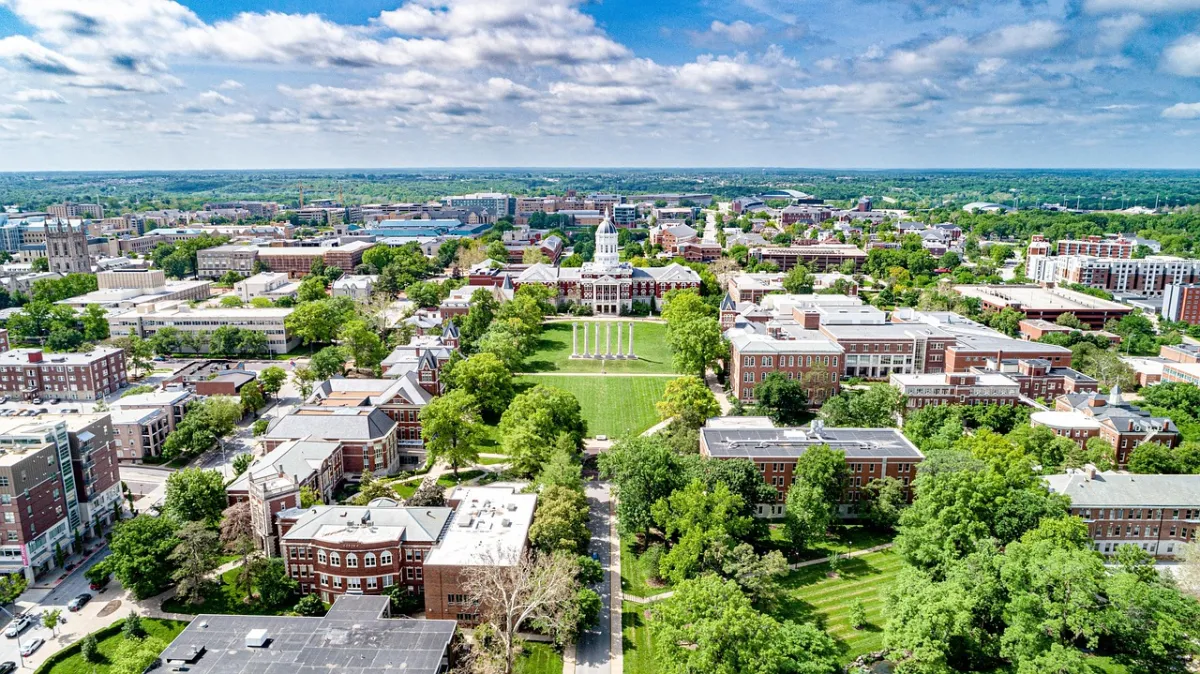 Photo: University of Missouri, via cdn.pixabay.com
Conway's approach was unconventional. Instead of trying to eliminate the stutter, she taught Harold to work with it. She noticed that he spoke most fluently when he was passionate about a subject, when emotion overrode self-consciousness. She also discovered that Harold had an unusual gift for mimicry—he could perfectly reproduce accents, speech patterns, even the subtle vocal tics of professors and classmates.
"Your stutter isn't a bug," Conway told him during one breakthrough session. "It's a feature you haven't learned to use yet."
She was right. The same neural wiring that caused Harold's speech to fragment also made him extraordinarily sensitive to language. He heard subtleties that fluent speakers missed. He understood the power of pauses, the weight of carefully chosen words, the way rhythm and repetition could hypnotize an audience.
The Accidental Activist
After college, Harold took a job as a clerk at a Kansas City steel mill, figuring he could avoid public speaking indefinitely. But 1955 was a turbulent year for American labor, and even quiet clerks sometimes got pulled into larger fights.
When the mill's management announced wage cuts and benefit reductions, the union called for worker representatives to speak at a public hearing. Harold volunteered, not because he wanted to speak, but because nobody else would do it. His coworkers figured they had nothing to lose—worst case scenario, Silent Sam would embarrass himself and they'd be no worse off.
Harold spent two weeks preparing for that five-minute speech. He wrote and rewrote every sentence, practicing in front of his bathroom mirror until he could deliver the words without major stuttering episodes. He studied recordings of great speakers, analyzing their techniques, stealing their tricks.
When the night arrived, something magical happened. Standing before a crowd of three hundred workers and their families, Harold's stutter didn't disappear—it transformed. The pauses that marked his struggling consonants became dramatic beats that emphasized key points. His careful, measured delivery made every word feel deliberate and weighty. His obvious nervousness made him seem authentic in a way that polished politicians never could.
The Power of Imperfection
The speech was a revelation. Harold didn't sound like other union leaders with their practiced rhetoric and smooth delivery. He sounded like what he was—a working man who'd thought deeply about working-class problems and found the courage to speak uncomfortable truths.
Local newspapers covered the speech, noting the "unusual eloquence" of the soft-spoken clerk. Union leaders from other locals began requesting Harold's help with their own contract negotiations. Word spread through labor circles about the stammering speaker who could somehow move audiences to action.
Harold's stutter became his signature. Audiences leaned forward when he spoke, straining to catch every carefully crafted phrase. His pauses created tension that made listeners hang on his next words. His obvious struggle to communicate made every successful sentence feel like a victory shared between speaker and audience.
Mastering the Microphone
By the early 1960s, Harold had become a fixture at labor rallies across the Midwest. His speaking style had evolved into something unprecedented in American politics—a form of broken eloquence that was simultaneously humble and commanding.
He developed techniques that turned his disability into advantage. He used repetition not just for emphasis, but to give himself time to navigate difficult consonants. He learned to pause before challenging words, creating anticipation that made his eventual delivery even more powerful. He mastered the art of the incomplete sentence, letting audiences fill in the blanks and feel like partners in his communication.
Most importantly, Harold never tried to hide his stutter. He owned it, acknowledged it, even joked about it. "I may not be the fastest talker," he would often begin speeches, "but I promise you'll remember what I said."
The Voice That Changed Everything
Harold's greatest moment came in 1965, when he was invited to testify before a Congressional subcommittee on workplace safety. The Occupational Safety and Health Act was stalled in committee, opposed by business interests who argued that federal oversight would cripple American industry.
For forty minutes, Harold spoke about workers he'd known—men who'd lost fingers to unsafe machinery, women who'd developed lung disease from textile dust, families destroyed by preventable industrial accidents. His stutter forced him to speak slowly, deliberately, giving weight to every tragic detail.
Congressman after congressman wiped away tears as Harold struggled through his testimony. The room fell completely silent during his pauses, creating a reverence that no polished lobbyist could have commanded. When he finished, the committee chairman said it was the most moving testimony he'd heard in thirty years of public service.
The OSHA Act passed six months later.
Legacy of the Broken Voice
Harold McKenzie never became a household name, but his influence on American labor policy was profound and lasting. He helped pass workplace safety legislation, pension protection laws, and anti-discrimination measures that protected millions of workers. His speeches were studied in political science classes as examples of authentic political communication.
More importantly, Harold proved that political power doesn't require perfect delivery. In an era increasingly dominated by media-trained politicians with focus-group-tested messages, his example reminds us that sometimes the most powerful voices are the ones that struggle to be heard.
He died in 1998, still stuttering, still fighting for working families. His final speech, delivered at a labor convention just months before his death, ended with words that captured his entire career: "I may not say it perfectly, but I'll never stop saying it: dignity, justice, and a fair day's pay for a fair day's work."
The crowd rose as one, applauding not just his words, but his lifetime of proving that the most unlikely voices sometimes carry the most important messages.