Anna Mary Robertson Moses was running out of ways to keep her hands busy.
At seventy-eight, the woman who would become known as Grandma Moses faced a cruel irony: the arthritis that twisted her fingers made embroidery—her lifelong passion—too painful to continue. For someone who had never sat idle, who had spent decades creating intricate needlework while running a farm and raising ten children, the forced stillness felt like a prison sentence.
So she picked up a paintbrush instead. And accidentally became one of America's most celebrated artists.
A Life Measured in Stitches
Anna Mary's story begins in 1860 on a farm in Greenwich, New York, where she was born into a world that measured a woman's worth in practical skills. She learned to embroider as a child, not as artistic expression but as necessary preparation for domestic life. Every young woman was expected to create samplers, tablecloths, and decorative pieces that would furnish her future home.
But Anna Mary brought something extra to her needlework—an eye for color and composition that transformed utilitarian stitching into something approaching art. Her embroidered pictures told stories: rural scenes of farm life, seasonal celebrations, memories of childhood winters. Neighbors began requesting pieces, drawn to the warmth and life she captured in thread.
Marriage to Thomas Moses in 1887 brought new responsibilities that pushed embroidery to the margins of her life. The couple farmed first in Virginia, then returned to New York, where Anna Mary raised children, tended livestock, and managed a household with the efficiency of someone who understood that survival depended on never wasting a moment.
Still, she found time for her needlework. In quiet evening hours, after children were fed and chores completed, her hands would return to familiar rhythms of stitching. The embroidered pictures grew more sophisticated over the decades, developing a distinctive style that captured rural American life with both accuracy and affection.
When Fingers Fail
By the 1930s, Anna Mary was a widow living with her son and daughter-in-law, her children grown and scattered. She had more time for embroidery than she'd enjoyed in decades, but her hands betrayed her. Arthritis made the delicate work increasingly difficult, turning pleasure into frustration.
A practical woman doesn't mourn what she can't change—she finds alternatives. Anna Mary had watched her sister paint and remembered enjoying art classes as a young girl. If her fingers couldn't manage embroidery needles, perhaps they could hold a brush.
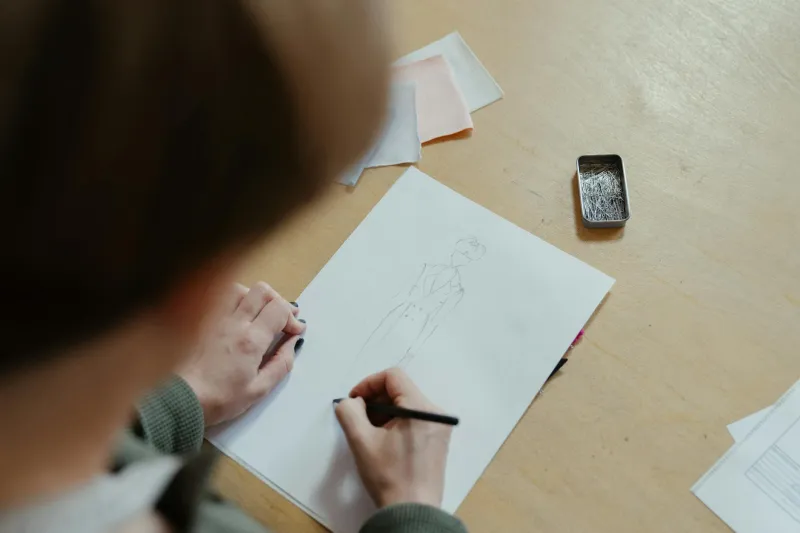
She started with house paint on scraps of cardboard, teaching herself through trial and error. The transition wasn't easy. Painting required different skills than embroidery—broader strokes instead of precise stitches, mixing colors instead of selecting threads. But the same eye that had guided her needlework now directed her brush.
Discovering a New Voice
Anna Mary's first paintings were direct translations of her embroidered scenes: rural landscapes, seasonal activities, childhood memories. But painting offered freedoms that embroidery couldn't match. She could capture the sweep of rolling hills, the movement of clouds, the bustle of harvest time with an immediacy that thread had never allowed.
Her style developed organically, influenced by memory rather than training. She painted the world as she remembered it—bright, busy, optimistic. Her canvases filled with details that spoke to lived experience: the way snow clings to fence posts, how children sledding create paths down hillsides, the organized chaos of maple sugar time.
Local recognition came slowly. She displayed paintings at the Cambridge county fair, where they hung alongside quilts and preserves as examples of rural craftsmanship rather than fine art. A few sold for modest prices to neighbors who appreciated their familiar subjects.
The breakthrough came in 1938, when Louis Caldor, a New York art collector, discovered several of her paintings in a drugstore window in Hoosick Falls. Caldor recognized something special in the work—a authentic American voice uninfluenced by artistic trends or formal training.
Late-Life Revolution
Caldor arranged Anna Mary's first gallery exhibition in New York City in 1940. She was eighty years old. The art world, accustomed to discovering young talent, didn't know what to make of an elderly farm woman whose work looked nothing like contemporary painting.
But audiences connected immediately with her vision of American rural life. Her paintings offered something increasingly rare in modern art: pure storytelling. Each canvas was filled with narrative details that invited viewers to explore and discover. Critics might debate artistic merit, but people simply loved looking at her work.
The timing proved perfect. As America entered World War II, Grandma Moses' paintings provided comfort and nostalgia for a simpler time. Her rural scenes reminded viewers of values and traditions that felt threatened by global conflict. She became a symbol of authentic Americana, representing continuity in an age of upheaval.
The Business of Being Grandma Moses
Success brought challenges Anna Mary never anticipated. At an age when most people seek quiet retirement, she found herself managing a career that included gallery exhibitions, media interviews, and commercial partnerships. Her image appeared on everything from Christmas cards to ceramic plates.
She approached fame with the same practical attitude she'd applied to farming. If people wanted to buy her paintings, she'd paint more. If interviews helped sell artwork, she'd give interviews. But she never let commercial success change her fundamental approach to painting—she continued creating the rural scenes that had first captured public attention.
Her productivity was remarkable for someone of any age. Between 1940 and her death in 1961, she completed over 1,000 paintings while maintaining an active public schedule. She painted almost daily, treating her art with the same work ethic she'd applied to farming.
Beyond the Brushstrokes
Grandma Moses' story resonates because it challenges fundamental assumptions about creativity and aging. In a culture that often treats artistic achievement as a young person's game, she proved that life experience could be more valuable than formal training. Her late start became part of her appeal—she represented the possibility of reinvention at any age.
Her success also validated folk art in an era dominated by abstract expressionism. While contemporary artists explored increasingly complex intellectual concepts, Grandma Moses painted recognizable scenes that told comprehensible stories. Her popularity suggested that audiences hungered for art that connected with lived experience rather than artistic theory.
The Arthritic Advantage
The arthritis that ended Anna Mary's embroidery career may have been the key to her painting success. Forced to work with broader strokes and simpler techniques, she developed a style that was both accessible and distinctive. The physical limitations that seemed like obstacles became defining characteristics of her artistic voice.
Her story offers hope to anyone facing unexpected limitations. What feels like an ending might be a beginning. The skills we've developed in one area of life can translate to new endeavors in surprising ways. Sometimes the thing that forces us to change direction leads us exactly where we need to go.
Anna Mary Robertson Moses died in 1961 at age 101, having spent the last twenty years of her life as one of America's most famous artists. She proved that creativity doesn't diminish with age—it just finds new ways to express itself. Her legacy reminds us that it's never too late to pick up a brush and start painting your own story.