The Accountant Who Hated His Job
J.I. Rodale was 41 years old and absolutely miserable. It was 1939, and he spent his days hunched over ledgers in a cramped New York office, managing the books for a small manufacturing company. His health was failing—chronic fatigue, digestive problems, a general sense that his body was breaking down faster than it should. His doctor's advice was simple: rest more, worry less, take some pills.
 Photo: J.I. Rodale, via rodaleinstitute.org
Instead, Rodale bought a run-down farm in Emmaus, Pennsylvania, and started digging in the dirt.
His friends thought he'd lost his mind. Here was a city-born accountant with no farming background, no agricultural training, and no business sense when it came to crops, deciding to become a farmer during the Great Depression. Even his wife, Anna, worried that her husband's latest obsession would bankrupt them.
But Rodale had been reading—voraciously, obsessively—about soil health, plant nutrition, and the connection between what we eat and how we feel. Most of what he read contradicted everything American agriculture was moving toward: bigger farms, more chemicals, higher yields through industrial methods.
The Crazy Neighbor
Rodale's 63-acre farm sat in the heart of Pennsylvania Dutch country, surrounded by neighbors who had been farming the same land for generations. They watched with amusement as the city accountant began implementing ideas that seemed to come from another planet.
While they sprayed their crops with the latest pesticides and fertilizers, Rodale composted kitchen scraps and manure. While they plowed their fields into perfect rows, he left sections wild to encourage beneficial insects. While they fought weeds with chemicals, he pulled them by hand and used them as mulch.
His first harvests were disasters. His corn was stunted, his vegetables were eaten by bugs, and his yields were embarrassingly low. Local farmers would drive by just to see how badly the city boy was failing. Some offered advice; others just shook their heads.
But Rodale kept detailed records of everything—soil composition, weather patterns, which plants thrived and which struggled, how different composting methods affected crop health. He approached farming like the accountant he'd been, measuring and analyzing every variable.
The Soil Whisperer
Slowly, something remarkable began happening. Rodale's soil, which had been depleted from decades of industrial farming, started coming back to life. His compost-rich fields began producing vegetables that were not just healthy, but extraordinarily flavorful. His neighbors noticed that his crops seemed more resistant to drought and disease, even without chemical protection.
More importantly, Rodale's own health was improving dramatically. The chronic fatigue lifted. His digestive problems disappeared. He felt stronger and more energetic than he had in years. He became convinced that the connection between soil health and human health was more direct than anyone realized.
In 1942, he started a small magazine called "Organic Farming" to share what he was learning. The first issue had 12 subscribers, mostly fellow farmers who had heard about his unusual methods. Rodale wrote every article himself, mixing practical farming advice with passionate arguments about the dangers of chemical agriculture.
The timing couldn't have been worse. World War II had created huge demand for American agricultural products, and the government was promoting industrial farming methods as patriotic. Rodale's warnings about pesticide dangers and soil depletion sounded like hippie nonsense to most readers.
The Stubborn Publisher
But Rodale had the patience of someone who had watched soil slowly regenerate over years of careful tending. He kept publishing, kept experimenting, and kept documenting results. His magazine circulation grew slowly but steadily, reaching farmers who were beginning to notice problems with chemical-dependent agriculture: soil erosion, declining crop quality, mysterious health issues in livestock.
By the 1950s, Rodale had expanded beyond farming into broader health and nutrition topics. He launched "Prevention" magazine, applying the same soil-to-plate philosophy to human wellness. The medical establishment dismissed him as a quack, but readers were hungry for information about natural health approaches.
Rodale's writing was never polished or academic. He had the enthusiasm of a recent convert, the urgency of someone who believed he'd discovered something important, and the practical wisdom of someone who had learned by doing rather than studying. His magazines felt like letters from a friend who had figured out something amazing and couldn't wait to share it.
The Vindicated Prophet
J.I. Rodale died in 1971, just as the environmental movement was beginning to take his warnings about chemical agriculture seriously. Rachel Carson's "Silent Spring" had awakened public concern about pesticide dangers. The first Earth Day had made environmental protection a mainstream cause. Suddenly, the crazy neighbor from Emmaus didn't seem so crazy anymore.
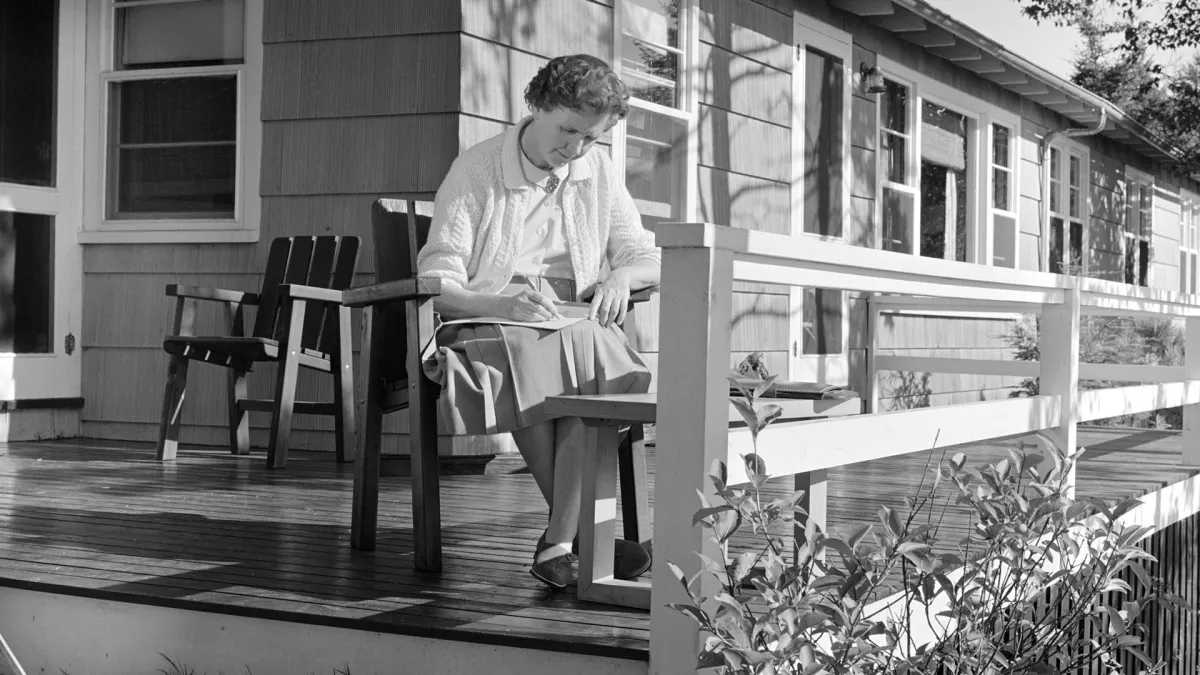 Photo: Rachel Carson, via assets.editorial.aetnd.com
His son Robert took over the family business and watched organic farming grow from a fringe movement to a billion-dollar industry. Rodale's experimental farm became the Rodale Institute, conducting scientific research that validated many of his father's intuitive discoveries about soil health and sustainable agriculture.
The magazines J.I. Rodale started in his farmhouse eventually reached millions of readers. "Prevention" became one of America's most successful health publications. The organic farming movement he helped pioneer transformed grocery stores, restaurant menus, and government agricultural policy.
The Long Harvest
Today, when shoppers pay premium prices for organic vegetables or read ingredient labels looking for natural products, they're participating in a revolution that started with a miserable accountant who decided to get his hands dirty. Rodale's influence can be traced through decades of environmental activism, alternative medicine, and sustainable agriculture.
He never claimed to have invented organic farming—indigenous farmers had been using similar methods for thousands of years. But he was among the first to document these practices systematically, to connect soil health with human health, and to argue that industrial agriculture's short-term gains came at an unsustainable long-term cost.
The accountant who hated his job became the grandfather of a movement that changed how millions of Americans think about food, health, and the environment. His legacy lives in every farmers market, every organic grocery aisle, every backyard compost bin. Sometimes the most important revolutions start not in laboratories or lecture halls, but in the dirt under our feet, tended by people patient enough to watch good ideas slowly take root.