Faster Than Impossible: How Wilma Rudolph Outran Everything the World Threw at Her
Faster Than Impossible: How Wilma Rudolph Outran Everything the World Threw at Her
In the summer of 1960, a twenty-year-old woman from Clarksville, Tennessee, stood on a track in Rome and did something no American woman had ever done: she won three gold medals at a single Olympic Games. The crowd called her La Gazzella Nera — the Black Gazelle. The Italian press couldn't get enough of her. She was fast, yes, but there was something else in the way she ran — a quality that felt less like athletic training and more like a personal reckoning with gravity itself.
What most of the Romans in those stands didn't know was that Wilma Rudolph had spent a significant portion of her childhood unable to walk at all.
Born into the Odds
Rudolph was the twentieth of twenty-two children born to Ed and Blanche Rudolph in rural Tennessee. The family was poor in the way that requires no elaboration — a two-room house, a father who worked multiple jobs, a mother who cleaned houses for white families and came home to care for a small city's worth of children. Wilma was premature, arriving at four and a half pounds in a time and place where premature Black babies in the rural South had very long odds.
She survived. Then she got sick.
By the time Wilma was four, she had cycled through pneumonia, scarlet fever, and a bout of polio that left her left leg partially paralyzed. A doctor in Nashville — fifty miles away, the nearest facility that would treat Black patients — fitted her with a metal brace and delivered the kind of prognosis that tends to calcify into a life sentence: she might walk again someday, with work. She would never be athletic. She would need the brace for years.
Blanche Rudolph took note of the prognosis and then largely ignored it.
The Brace Comes Off
What happened next is one of the more quietly extraordinary stories in American sports history, and it happened not on a track but in a living room in Clarksville.
Blanche organized the family into a rotation. Every day, multiple times a day, Wilma's siblings took turns massaging her leg — working the muscles, maintaining circulation, keeping the limb from surrendering to atrophy. The family drove to Nashville for physical therapy appointments when they could afford it. When they couldn't, they improvised. Wilma watched her brothers and sisters play outside and filed the image away like a promise she was making to herself.
At nine, she walked into church one Sunday without her brace. Just walked in. No announcement, no dramatic moment — she just didn't put it on that morning and nobody stopped her. Her mother looked at her across the pew and didn't say a word. She didn't have to.
By twelve, Wilma was playing basketball. By thirteen, she was running track. By fifteen, she was training with Ed Temple, the legendary coach of the Tennessee State Tigerbelles, a program that would produce more Olympic medalists than most countries.
Rome, 1960
The 1960 Rome Olympics were Rudolph's second Games. She had competed in Melbourne in 1956 at sixteen, winning a bronze in the relay. Rome was different. Rome was hers.
She won the 100-meter dash. She won the 200-meter dash. She anchored the 4x100 relay team to gold despite a near-disastrous baton exchange that briefly looked like it might cost them everything. In the final leg, she made up the gap. Of course she did.
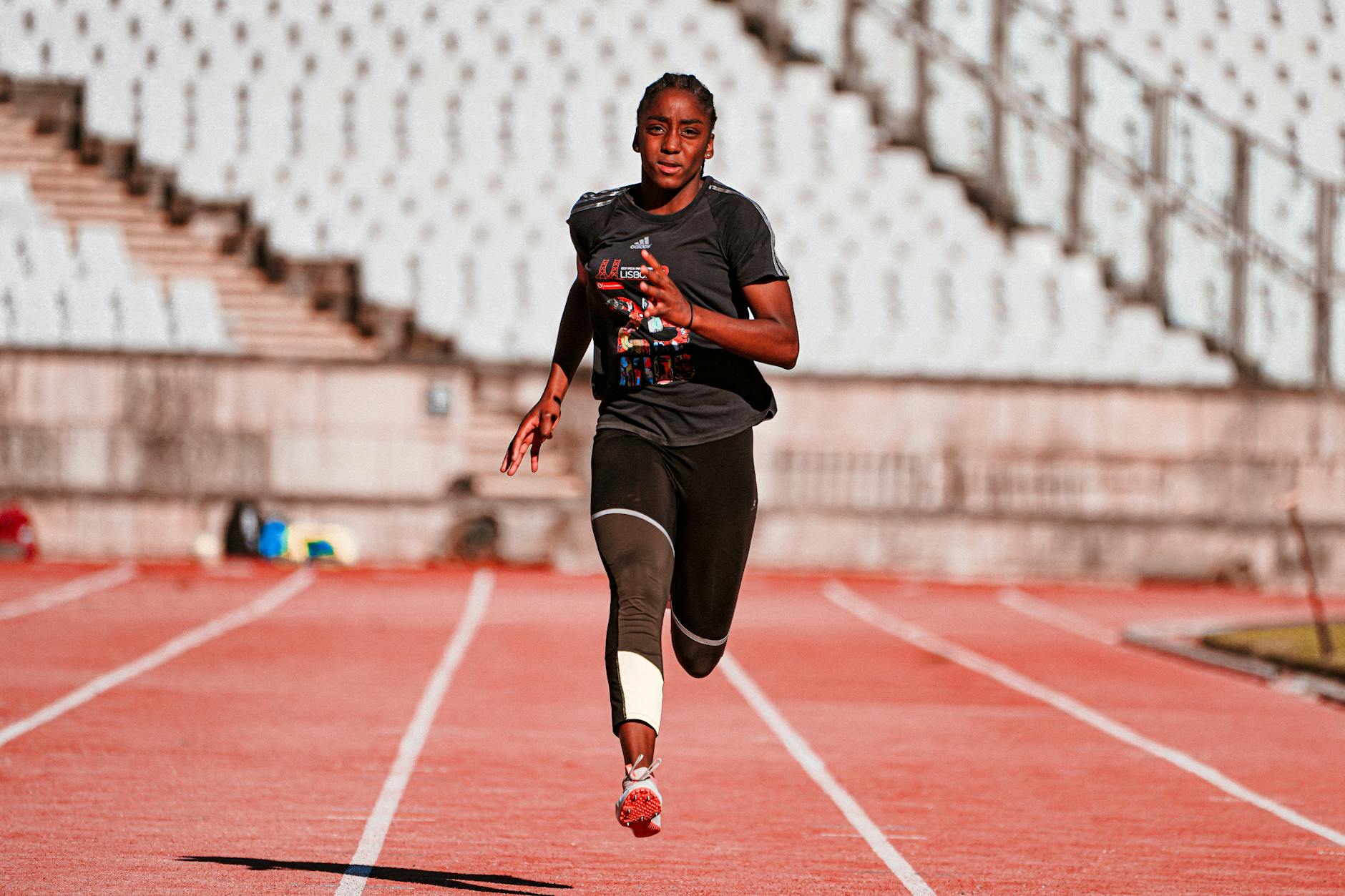
The images from those races — Rudolph's stride, that particular looseness and power — still hold up. She looked like someone for whom running was simply the most natural thing in the world, which is extraordinary when you understand what it cost her to get there.
She came home to a ticker-tape parade in Clarksville. She insisted, before accepting, that the parade be integrated — the first integrated public event in the city's history. She was twenty years old.
What Made Her Different
Athletes who overcome serious physical setbacks aren't uncommon in the record books. What made Rudolph's story singular was the layering of it — the poverty, the illness, the racial barriers, the sheer number of systems that were structurally indifferent or actively hostile to her success — and the fact that she navigated all of it without apparent bitterness.
People who knew her described a woman who was intensely competitive but not consumed by it. She wanted to win, but she also wanted to go somewhere — to be seen, to matter, to prove something not just to herself but to every kid in every small Southern town who had been handed a limiting diagnosis by a world that wasn't paying close enough attention.
After retiring from competition at twenty-two, she founded the Wilma Rudolph Foundation, which provided free coaching and tutoring to children in underserved communities. She understood that her story wasn't just hers. It was a template, or at least an argument — evidence that the gap between what you're told is possible and what actually is possible can be enormous.
What She Still Has to Teach Us
Wilma Rudolph died in 1994 at fifty-four, taken by brain cancer. She left behind three Olympic golds, a foundation, and a story that has been told and retold enough times that it risks becoming mythology — which is exactly the kind of thing that can drain the life out of a real person's real struggle.
So it's worth being specific. She wasn't magic. She didn't transcend her circumstances through sheer force of will in some abstract, motivational-poster sense. She had help — a mother who refused to accept a doctor's verdict, siblings who showed up every day to rub a little girl's leg, a coach who saw something worth developing. She worked inside a community that held her up.
What she brought to all of that was a refusal to locate the ceiling where everyone else kept pointing.
For modern athletes, that's the lesson that holds. Not the gold medals. Not the world records. The decision, made quietly and repeatedly, to keep running past the point where the world has already decided you should stop.
She made that decision at nine years old, walking into church without her brace.
Everything else was just speed.