Textbook Surgeon: How an American Con Man Saved Lives He Had No Business Saving
The Man Who Became Everyone
Ferdinand Waldo Demara Jr. was born in Massachusetts in 1921 to a modest family with no particular advantages and no obvious path to anything remarkable. By age 20, he'd already reinvented himself multiple times—as a monk, as a college professor (with forged credentials), as a prison chaplain. He was a man who understood that identity was fluid, that the line between who you are and who you convince people you are is thinner than most of us admit.
He was also a man who couldn't stay in one place for long. Not because he was running from the law—though eventually he would be—but because he was running from the weight of being ordinary. Each new identity was an escape hatch. Each new life was a chance to matter.
Then came the Korean War, and the opportunity that would define him.
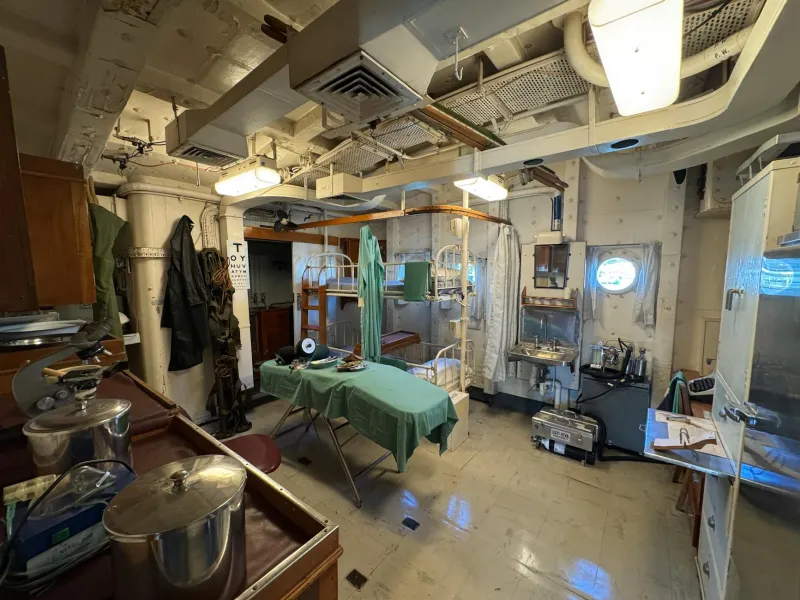
In 1951, Demara enlisted in the Royal Canadian Navy under an assumed name. He'd been kicked out of religious life for his compulsive lying, but the military didn't ask many questions about his past. Once aboard the HMCS Cayuga, a Canadian destroyer, he did what he'd done before: he lied about his credentials. He told the captain he was a surgeon.
He wasn't. He had no medical training whatsoever.
Improvisation at Sea
What happened next defies easy explanation. War is chaos. Naval combat is chaos compressed into metal corridors and split-second decisions. When soldiers and sailors came aboard the Cayuga wounded—some critically—there was no time to verify credentials. There was only a need and a man who claimed he could fill it.
Demara had two things working in his favor: a photographic memory and an absolute refusal to admit he didn't know something. He'd smuggled medical textbooks aboard ship. He studied them with the desperation of someone whose lie might cost lives. When a patient came to him, he consulted the books, asked the right questions, and acted with the confidence of someone who'd spent years in medical school.
The procedures he performed—amputations, bullet wound repairs, even tooth extractions—were crude by any standard. But they worked. Soldiers who should have died didn't. Infections that should have set in didn't. The success rate was, by all accounts, genuinely impressive.
How did he do it? Partly luck. Partly the fact that during wartime, the bar for "successful surgery" isn't cosmetic perfection—it's keeping someone alive. Partly because Demara had an almost supernatural ability to perform under pressure, to trust his instincts, and to never show doubt even when he had every reason to doubt himself.
But partly, too, because he was smarter than he had any right to be. A man who'd reinvented himself multiple times had learned how to observe, adapt, and absorb information quickly. He watched experienced medics. He asked questions that sounded casual but were intensely focused. He learned surgery the way actors learn roles—by studying the part obsessively and then becoming it.
The Exposure
The truth, of course, eventually came out. A Korean officer recognized Demara from his earlier life as a prison chaplain. The story leaked to the press. The Canadian Navy was humiliated. Demara was court-martialed, convicted, and discharged.
But here's the strange part: his patients didn't regret being treated by him. Some of them wrote letters. They were alive because of a con man with a textbook and unshakeable nerve. The Navy tried to minimize the story, to suggest that his success was an anomaly, that he'd gotten lucky. But the evidence suggested something more complicated.
Demara's story became a book, then a movie—"The Great Impostor" starring Tony Curtis in 1961. He became famous not as a surgeon, but as the man who'd faked being one and somehow pulled it off.
What Qualification Really Means
The troubling question at the heart of Demara's story is one we still haven't fully answered: What makes someone qualified? Is it the credentials on paper, or the actual ability to perform under pressure? Is it the years of formal training, or the desperate intelligence that forces you to learn faster than you've ever learned anything?
Demara wasn't a surgeon, and he shouldn't have been performing surgeries. The ethical violations are obvious. But he was also a man who, faced with an impossible situation—wounded soldiers, no real medical staff, lives hanging in the balance—didn't freeze. He didn't panic. He didn't admit he couldn't do it. He did it.
After the war, Demara drifted through other professions—teacher, minister, counselor—always lying about credentials, always getting caught, always moving on. He died in 1982, having lived a dozen lives and mastered none of them completely. But for one crucial moment in 1951, he'd mastered something that mattered more than credentials ever could: the ability to function under conditions that would have broken most people.
He was a fraud. He was also, briefly and improbably, exactly what his patients needed him to be. That contradiction is what makes his story worth remembering—not as a celebration of deception, but as a meditation on what human beings are capable of when desperation meets determination, and when the only qualification that matters is whether you can keep someone alive.