The Man Who Watched Storms Before Anyone Knew How: James Finley's Lonely Quest to Predict the Unpredictable
The Edge of Everything
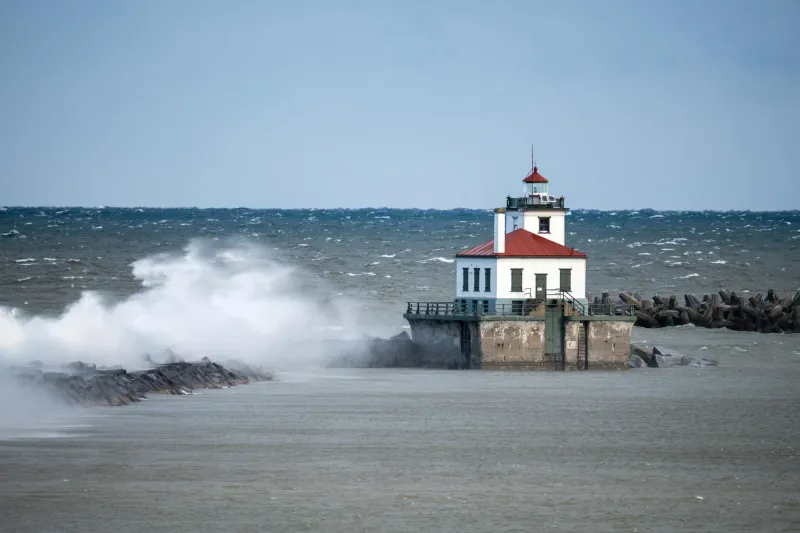
In 1847, James Pugh Finley accepted what most people would consider a punishment: keeper of the lighthouse at Presque Isle, a desolate spit of land jutting into Lake Huron where winter storms could trap a man for months. The pay was modest, the isolation complete, and the work seemingly simple—keep the light burning, warn ships away from the rocks, file basic weather reports with the Army Signal Corps.
Finley had other plans.
While ships' captains cursed the unpredictable storms that could turn calm waters deadly in minutes, Finley saw patterns. Where others saw chaos, he noticed repetition. Where the scientific establishment saw random acts of nature, this former schoolteacher from Ohio began to detect the fingerprints of something systematic and knowable.
The Obsession Begins
Most lighthouse keepers filed the required weather observations as an afterthought—a quick note about wind direction and temperature to satisfy bureaucratic requirements. Finley transformed these reports into an art form. He measured wind speed by watching how far his hat would blow. He tracked barometric pressure using a homemade instrument crafted from a pickle jar and mercury. He noted cloud formations with the precision of a portrait artist.
But it was the violent storms that truly captured his attention. While others sought shelter, Finley positioned himself at his lighthouse's observation deck, documenting the behavior of what locals simply called "twisters" or "cyclones." He sketched their paths, timed their duration, and recorded the atmospheric conditions that preceded their arrival.
For fifteen years, the scientific community ignored his reports. The prevailing wisdom held that tornadoes were too rare and random to study meaningfully. The Weather Bureau, established in 1870, actually forbade its forecasters from using the word "tornado" in official communications, believing such warnings would cause unnecessary panic.
Finley kept watching anyway.
The Breakthrough Nobody Wanted
By 1877, Finley had accumulated something unprecedented: three decades of detailed tornado observations from a single location. His logbooks contained meticulous records of 117 confirmed tornadoes, along with the atmospheric conditions that preceded each one. He had identified what he called "tornado days"—specific combinations of temperature, humidity, and wind patterns that created perfect conditions for violent storms.
When Finley finally published his findings in a series of papers for the American Meteorological Journal, the response was swift and dismissive. Established meteorologists argued that a lighthouse keeper—a man without formal scientific training—couldn't possibly contribute meaningful research to their field. They questioned his methods, his credentials, and his conclusions.
They were wrong about everything except his credentials.
Vindication in Violence
The breakthrough came in 1884, when Finley used his system to correctly predict a series of tornado outbreaks across the Midwest. While official Weather Bureau forecasters continued to issue vague warnings about "severe weather," Finley's predictions specified not just the likelihood of tornadoes, but their probable paths and timing.
Newspapers began reprinting his forecasts. Farmers started planning their work around his warnings. Railroad companies adjusted their schedules based on his predictions. When a devastating tornado struck Louisville, Kentucky, exactly as Finley had predicted, killing 76 people who might have sought shelter had they received adequate warning, public pressure finally forced the scientific establishment to take notice.
The Reluctant Revolution
By 1888, the Weather Bureau quietly began incorporating Finley's methods into their forecasting procedures. They never officially credited him, but his influence was unmistakable. The same patterns he had identified from his lighthouse perch—the interaction between cold, dry air masses and warm, moist air—became the foundation of modern severe weather prediction.
Finley's success rate was remarkable: he correctly predicted tornadoes 96.6% of the time, with false alarms occurring in only 2.8% of his forecasts. These numbers wouldn't be matched by official weather services for another fifty years.
Legacy of the Lighthouse
When Finley retired in 1891, he had logged over 40,000 weather observations and identified the atmospheric signatures of severe weather that meteorologists still use today. His work laid the groundwork for the National Weather Service's tornado warning system, which has saved countless lives over the past century.
The irony wasn't lost on Finley himself. In his final report, he wrote: "I have spent my career watching for ships in distress, but perhaps my greatest service was learning to see storms before they could create that distress."
The Watcher's Wisdom
Finley's story reveals something profound about the nature of expertise and innovation. Sometimes the most important discoveries come not from the centers of established knowledge, but from the edges—from people positioned to see what others miss, with the time and obsession necessary to notice patterns that faster-moving minds overlook.
His lighthouse has long since been automated, its keeper's quarters empty. But on days when tornado watches stretch across the Plains, when Doppler radar tracks rotating storms with precision that would have amazed a 19th-century lighthouse keeper, James Pugh Finley's legacy lives on in every life saved by advance warning.
The man who watched storms taught us that sometimes the best view of the future comes from the most isolated vantage point, and that the most valuable knowledge often belongs to the people institutions are least likely to listen to.