
The Rejection Letters
The letter arrived on a Tuesday morning in 1946, and Constance Baker Motley read it twice before the words fully registered. She had failed the New York bar exam. Again. At 24, with a law degree from Columbia hanging on her wall and two crushing defeats behind her, she faced a choice that would define not just her career, but the trajectory of civil rights law in America.
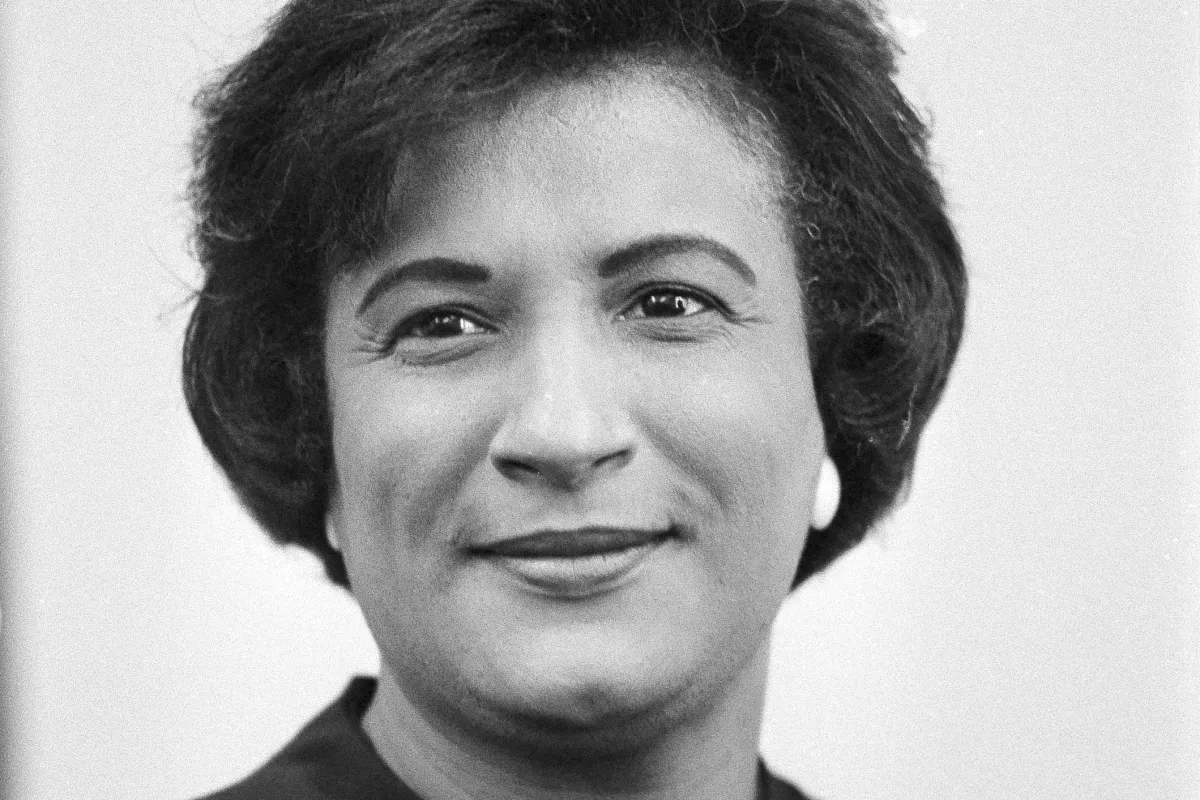 Photo: Constance Baker Motley, via broadsyoushouldknow.com
Her professors had warned her this might happen. Not because she lacked intelligence—her grades proved otherwise—but because the legal profession in 1946 wasn't designed for young Black women. The bar exam wasn't just testing legal knowledge; it was enforcing an unspoken code about who belonged in America's courtrooms.
Motley's classmates, mostly white men from established families, passed on their first attempts and moved into prestigious firms. She returned to her small apartment in Harlem, wondering if her dream of practicing law was just that—a dream.
The Stubborn Student
But Constance Baker Motley had been defying expectations her entire life. Growing up in New Haven, Connecticut, she was the daughter of immigrants from the Caribbean who cleaned houses and worked as a chef to pay for their children's education. When Motley announced her intention to become a lawyer, guidance counselors steered her toward teaching or nursing—"more appropriate" careers for a young woman of color.
She ignored them. At Fisk University and later Columbia Law School, she absorbed not just legal theory but a deeper understanding of how law could be a tool for social change. She watched older civil rights attorneys like Thurgood Marshall argue cases and began to see patterns in their strategies, weaknesses in their opponents' arguments.
 Photo: Columbia Law School, via www.law.columbia.edu
The bar exam failures stung, but they also taught her something crucial: the legal system wasn't neutral. It had been designed to exclude people like her, which meant she would have to be twice as prepared, twice as strategic, twice as relentless as her peers.
The Third Attempt
Motley's third bar exam attempt in 1947 was different. She didn't just study the law; she studied the exam itself. She analyzed previous years' questions, identified patterns in the grading, and prepared for every possible curveball. More importantly, she approached the test with a new mindset. This wasn't just about proving she could practice law—it was about earning the right to fight for justice in the highest courts in the land.
When the results came back positive, Motley didn't celebrate. She got to work.
The Cases That Changed Everything
Her first major victory came in 1950, when she successfully argued for the admission of Black students to the University of Alabama. The case established legal precedents that would prove crucial in later desegregation battles. But it was her methodical approach—combining meticulous legal research with a deep understanding of Southern politics and social dynamics—that set her apart.
Over the next two decades, Motley would argue 32 cases before the Supreme Court and win 29 of them. She wrote the original complaint for Brown v. Board of Education. She represented James Meredith in his fight to integrate the University of Mississippi. She defended the Freedom Riders, argued for fair housing laws, and challenged employment discrimination across the South.
 Photo: University of Mississippi, via c8.alamy.com
Each victory built on lessons learned from those early failures. The bar exam defeats had taught her that success in the legal system required more than just knowing the law—it demanded understanding the psychology of judges, the politics of precedent, and the patience to build airtight cases that couldn't be dismissed or overturned.
The Strategy Behind the Wins
Motley's approach was distinctive in the civil rights legal community. While some attorneys relied on emotional appeals or dramatic courtroom moments, she built her cases like mathematical proofs. Every argument was supported by multiple precedents. Every potential counterargument was anticipated and dismantled before opponents could raise it.
Her colleagues noticed that she never seemed surprised by hostile questions from judges or unexpected tactics from opposing counsel. The early failures had taught her to prepare for every possibility, to assume nothing, and to have backup plans for her backup plans.
This methodical approach proved especially effective in Southern courtrooms, where judges often looked for any excuse to rule against civil rights plaintiffs. Motley's cases were so thoroughly researched and carefully constructed that even sympathetic judges found it difficult to rule against her.
The Federal Bench
In 1966, President Lyndon Johnson nominated Motley to the federal bench, making her the first Black woman federal judge in American history. Some observers noted the irony: the woman who had failed the bar exam twice was now in a position to interpret the law for an entire judicial district.
Judge Motley served with distinction for 40 years, handling everything from securities fraud to civil rights violations. Her opinions were known for their clarity, their thorough grounding in precedent, and their practical understanding of how legal decisions affected real people's lives.
The Long View
Looking back on her career, Motley often reflected on how those early failures had shaped her success. The bar exam defeats had forced her to develop a deeper, more strategic understanding of the legal system than many of her peers possessed. They had also given her empathy for others facing seemingly insurmountable obstacles.
"Every rejection taught me something about the system I was trying to change," she wrote in her autobiography. "By the time I started winning cases, I understood not just the law, but the prejudices and assumptions that shaped how the law was applied."
Constance Baker Motley died in 2005, having lived to see an America transformed partly through her own legal victories. The young woman who couldn't pass the bar exam had helped write the legal framework for modern civil rights law. Sometimes the people who change the system are exactly the ones the system initially rejects—not despite their early failures, but because of what those failures teach them about how change really happens.