The Boy Who Wouldn't Sit Still
In 1932, a gangly 14-year-old stepped off a ship in New York Harbor with little more than broken English and a head full of questions about everything except what his teachers wanted him to study. Walter Munk had fled Austria just as the Nazi shadow began creeping across Europe, but he carried something more valuable than any suitcase: an unshakeable curiosity about how the world actually worked.
Most refugee stories focus on survival and adaptation. Munk's story is different. He didn't just survive—he revolutionized our understanding of the ocean itself, almost by accident.
The Accidental Scientist
Munk's path to scientific greatness started with spectacular academic failure. He bounced between prep schools, bored senseless by traditional coursework. When he applied to MIT, they rejected him outright. His grades weren't the problem—his restlessness was. He couldn't sit still long enough to excel at anything conventional.
So he drifted west to California, enrolling at the California Institute of Technology not because he had a plan, but because he needed somewhere to go. It was 1939, and the world was sliding toward war. Munk was still searching for something that could hold his attention longer than a semester.
Then he met Harald Sverdrup, a Norwegian oceanographer who saw something in this distracted young man that no one else had noticed. Sverdrup didn't try to force Munk into a traditional academic mold. Instead, he handed him a problem that had been frustrating scientists for decades: Why do ocean waves behave the way they do?
Waves, War, and Wandering Minds
Most people see waves as random, chaotic forces—beautiful but unpredictable. Munk saw patterns. While other scientists focused on individual waves, he stepped back and looked at the bigger picture. He realized that waves carry information across entire ocean basins, like messages written in water.
This insight came at exactly the right moment. World War II was raging, and the Allied forces desperately needed to understand wave patterns for amphibious landings. Traditional weather forecasting could predict storms, but predicting surf conditions days in advance? That seemed impossible.
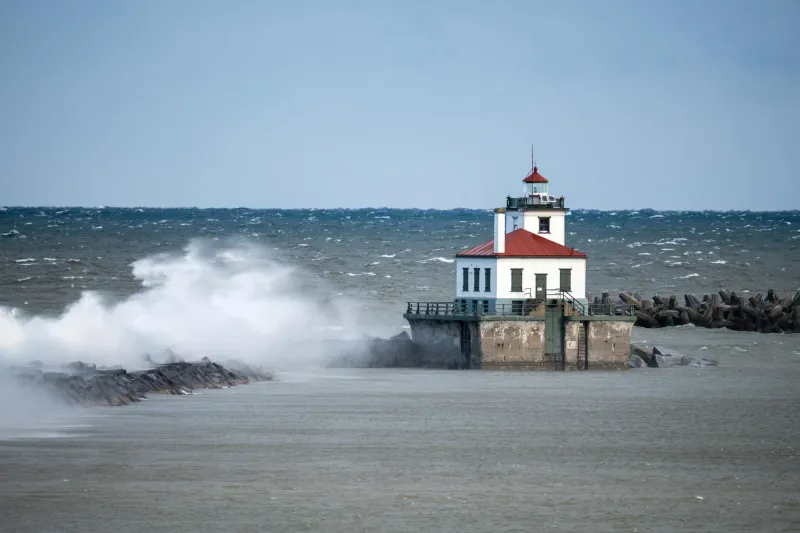
Munk made it possible. Working with Sverdrup, he developed mathematical models that could forecast wave conditions with unprecedented accuracy. Their work directly contributed to the success of D-Day—Allied commanders used Munk's wave predictions to choose the optimal timing for the Normandy landings.
But Munk was just getting started.
The Clifftop Laboratory
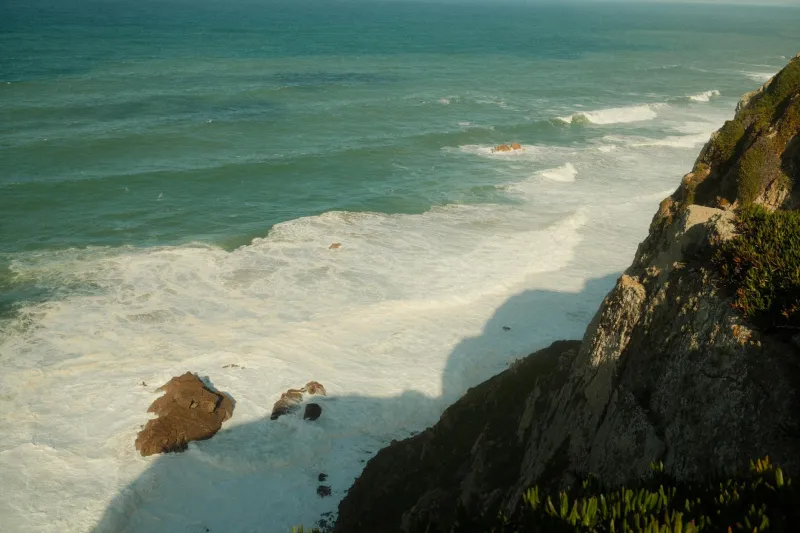
After the war, while other scientists returned to traditional academic careers, Munk did something characteristically unconventional. He established himself at the Scripps Institution of Oceanography in La Jolla, California, in a laboratory perched on cliffs overlooking the Pacific Ocean.
From that vantage point, he could watch waves roll in from thousands of miles away. Other scientists studied the ocean from ships or submarines, getting close-up views of small areas. Munk preferred the long view, literally and figuratively.
Beyond the Surface
Munk's real breakthrough came when he realized that ocean waves weren't just surface phenomena—they were windows into the planet's interior structure. By studying how seismic waves from earthquakes traveled through ocean water, he could map the Earth's internal architecture with unprecedented precision.
This was revolutionary thinking. Geologists had been trying to understand the Earth's interior for centuries, drilling holes and studying rock samples. Munk showed them they could learn more by listening to the ocean itself.
The Immigrant's Gift
Munk's displacement—first from Austria, then from traditional academic expectations—turned out to be his greatest advantage. He approached oceanography without preconceptions about what was "supposed" to work. His outsider's perspective allowed him to see connections that specialists missed.
By the 1960s, Munk's work was reshaping multiple fields simultaneously. His wave theories influenced weather prediction, coastal engineering, and climate science. His seismic studies contributed to plate tectonics theory and earthquake research. His mathematical models became standard tools in oceanography worldwide.
The Long View
Munk worked well into his nineties, still asking questions that stumped younger scientists. He never lost the restlessness that had frustrated his early teachers, but he learned to channel it into patient, decades-long investigations of oceanic mysteries.
His legacy isn't just the specific discoveries he made—it's the way he demonstrated that the most profound scientific insights often come from the most unlikely sources. The refugee boy who couldn't sit still in class became the man who taught the world to read the ocean's deepest secrets.
Walter Munk proved that sometimes the best way to understand something is to approach it from the outside, with fresh eyes and an immigrant's hunger to make sense of a new world. In his case, that new world happened to be our entire planet.