Ashes to Anchovies: The Broke Dreamer Who Accidentally Invented the American Pizza Empire
There's a particular kind of humiliation that comes with business failure. It isn't just the money — though that stings plenty. It's the looks from people who quietly told you it wouldn't work. The creditors. The landlord who changes the locks. The version of yourself you have to quietly bury.
Tom Monaghan knew that feeling well. By his mid-twenties, he had already failed at more things than most people attempt in a lifetime. Orphaned young, bounced through foster homes, tossed out of seminary, dishonorably discharged from the Marines — and then, in 1960, the owner of a pizza shop in Ypsilanti, Michigan that was quietly bleeding him dry.
He didn't build Domino's Pizza from a position of strength. He built it from the ruins of everything else.
The First Collapse
Monaghan and his brother James scraped together enough money to buy a struggling pizza shop called DomiNick's in 1960. The plan was simple: run the restaurant, split the work, split the profits. Within eight months, James had traded his half of the business for a used Volkswagen Beetle and walked away.
That should have been the end of it. Monaghan was broke, alone, and running a failing restaurant in a college town where nobody particularly cared whether he succeeded. He had no formal business training, no culinary background, and no safety net. What he had was a stubborn, almost irrational belief that pizza could be something more than a sit-down meal.
He started delivering.
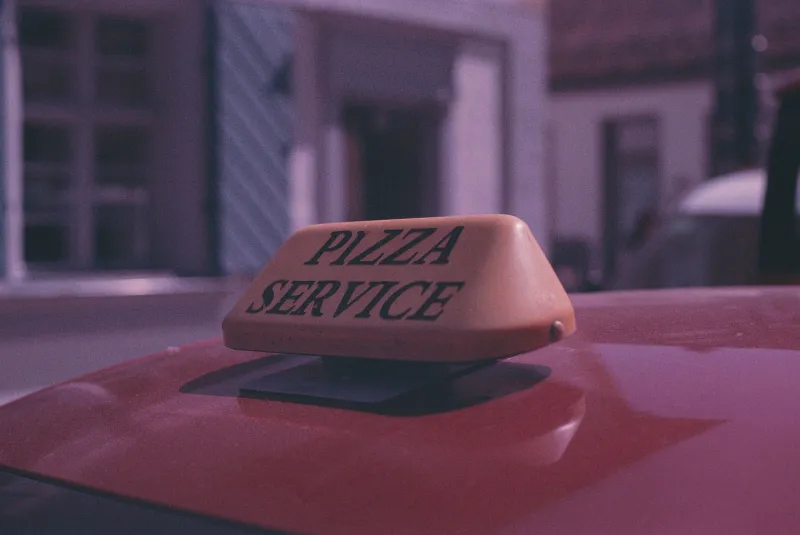
This sounds obvious now, in a world where an app can summon a calzone to your door in twenty minutes. But in 1960, the idea of a pizza restaurant built entirely around delivery — no dining room, no waitstaff, no atmosphere — was considered either visionary or ridiculous depending on who you asked. Most people asked thought it was ridiculous.
Learning to Fail Faster
The early years weren't a clean success story. Monaghan expanded too quickly, opened locations he couldn't manage, and by the late 1960s had racked up debts so severe that he briefly lost control of the company entirely. A creditor effectively took over operations for a period while Monaghan worked to buy himself back into his own business.
He later described those years as the most clarifying of his life.
Stripped of the ability to make grand decisions, forced to watch someone else run what he'd built, he became a student of the operation in a way he never had been as the boss. He watched where money leaked. He watched which stores thrived and which ones didn't. He started to understand, at a granular level, what actually made the model work.
The answer, it turned out, was simplicity. Fewer menu items. Faster ovens. A standardized box. And the thirty-minute delivery promise that would become one of the most famous marketing guarantees in American business history.
The Promise That Changed Everything
The thirty-minute guarantee wasn't just a gimmick. It was a philosophy baked into every part of how Domino's operated. Stores were deliberately located near college campuses and military bases — places where hungry people had limited options and strong opinions about waiting. The menu was stripped to its essentials so kitchens could move fast. Drivers were trained, not just hired.
By the early 1980s, Domino's had hundreds of locations. By the late 1980s, it had thousands. Monaghan, the kid who'd lost his restaurant and nearly lost his company, was running one of the most recognizable food brands on the planet.
He eventually sold the majority of Domino's in 1998 for close to a billion dollars. He used much of the money to fund Catholic charitable causes — a reflection of the faith he'd carried, imperfectly, since those early days in the seminary.
What Failure Actually Teaches
It would be easy to package Monaghan's story as a simple redemption arc: man falls down, man gets up, man wins. But that framing misses what actually happened.
Monaghan didn't succeed despite his failures. He succeeded because of what those failures forced him to see. Losing his brother's partnership taught him to build systems that didn't depend on any single person. Losing control of his company taught him to understand operations from the inside out. Nearly going broke — more than once — taught him that survival required focus, and focus required cutting everything that didn't matter.
The bankruptcy wasn't a detour on the road to success. It was the road.
America has always had a complicated relationship with failure. We celebrate the comeback story, but we rarely sit with the actual experience of collapse — the specific, uncomfortable education that comes from watching something you built fall apart. Monaghan sat with it. He let it teach him.
A Legacy Baked in Unlikely Beginnings
Today, Domino's operates in more than 90 countries. It has outlasted dozens of competitors, survived the rise of food delivery apps by becoming one itself, and remained one of the most studied franchise models in business school curricula across the country.
None of that was inevitable. It wasn't the product of a grand plan hatched in a boardroom. It was the product of a young man in Michigan who had nothing left to lose and a pizza oven that needed to be faster.
The Volkswagen James Monaghan took in trade for his half of the business? It's been estimated that share would eventually have been worth hundreds of millions of dollars.
Some trades you can't take back. Some collapses you can't undo. But occasionally — if you're paying attention in the wreckage — you find something worth more than what you lost.