Three Failures and a Revolution: Lutie Lytle and the Law Degree That Wasn't Supposed to Exist
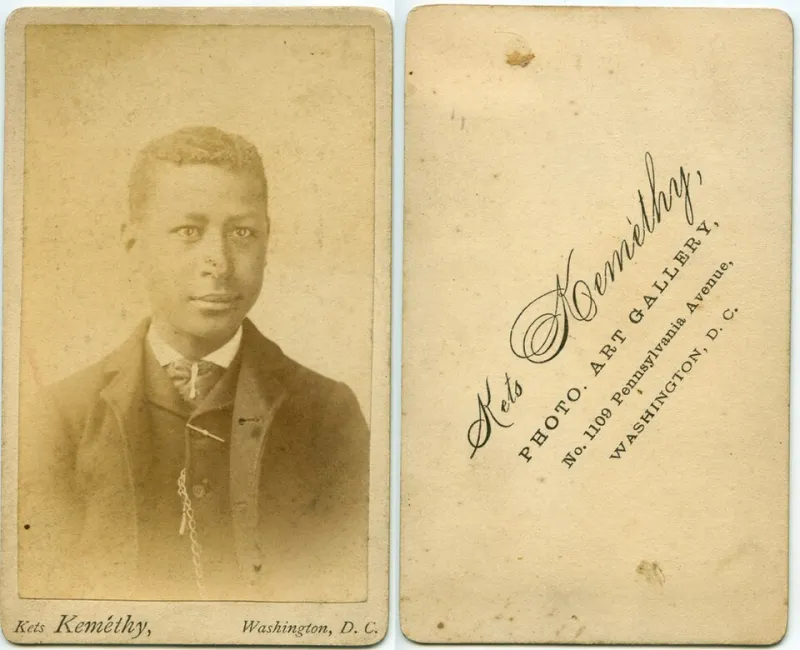
Photo: M. Kets Kemethy, Public domain, via Wikimedia Commons
A Profession Built to Exclude Her
The American legal system in the 1890s was not a neutral institution. It was a structure built by white men, for white men, and its gatekeeping mechanisms — bar exams, law school admissions, professional associations — were not designed with any ambiguity about who belonged inside them.
For a Black woman born in Tennessee in the years immediately following the Civil War, the idea of becoming a licensed attorney wasn't just difficult. It was, by the logic of every institution surrounding her, essentially impossible. The barriers weren't metaphorical. They were written into admissions policies, enforced by examination boards, and reinforced by a legal culture that had never seriously entertained the notion of her participation.
Lutie Lytle entertained it anyway.
Her story is one of the most consequential in American legal history, and it remains one of the least told. That imbalance is worth correcting.
The Tennessee Years
Lytle grew up in Murfreesboro, Tennessee, in a family that understood, with unusual clarity, that education was both the most valuable thing a Black child in the postwar South could acquire and the thing most actively denied to them. Her father was a man of modest means and enormous ambition — for himself, and more particularly for his children.
 Photo: Murfreesboro, Tennessee, via c2.staticflickr.com
She was, by every account that survives, an exceptional student. Sharp, disciplined, and possessed of the particular kind of stubbornness that looks like patience from the outside but is actually something considerably more aggressive underneath. She absorbed everything she was given and looked for more.
When she decided to pursue law, she did so with almost no institutional support. There were no law schools in Tennessee that would admit her. There were no established Black women attorneys to mentor her. There was no roadmap, because the road had never been built.
What there was, was a law library and a determination to use it.
The Exams That Said No
The bar examination, then as now, was the formal threshold between legal study and legal practice. Pass it, and the profession was obligated — at least in theory — to admit you. Fail it, and you went home.
Lytle failed it. And then she failed it again.
It would be tempting to read those failures as evidence of inadequate preparation, but the historical context complicates that interpretation considerably. Bar examinations in the 1890s were not standardized instruments of objective assessment. They were administered by committees of practicing attorneys who exercised enormous discretion over outcomes. The idea that a Black woman might receive impartial evaluation from such a committee, in Tennessee, in 1895, requires a degree of institutional optimism that the historical record does not support.
What the failures actually represented, in all likelihood, was a system working exactly as it had been designed to work — with Lutie Lytle on the wrong side of it.
She kept studying anyway.
Kansas and the Door That Opened
Lytle eventually made her way to Topeka, Kansas — a state with a somewhat more permeable legal culture, and a law school at Central Tennessee College that was willing to admit her. The distinction matters: she didn't find an easier path, she found a path that existed at all.
 Photo: Topeka, Kansas, via static1.thetravelimages.com
The legal education she received there was rigorous. She threw herself into it with the intensity of someone who understood that she wasn't just studying for herself — she was building a case, in the most literal sense, for the proposition that Black women belonged in American courtrooms.
When she sat for the Kansas bar exam, she passed. In 1897, Lutie Lytle became one of the first Black women admitted to practice law in the United States. The number of people who preceded her is genuinely disputed by historians; what is not disputed is that she was among the earliest, and that she arrived there through a route that required extraordinary persistence in the face of repeated institutional rejection.
Teaching What She'd Earned
What Lytle did with her license is, in some ways, as remarkable as how she obtained it. Rather than simply building a private practice, she returned to Central Tennessee College as a faculty member — one of the first Black women to teach law at an American institution.
The significance of that position extends beyond the personal. Every student she taught carried forward a version of the knowledge she had fought so hard to acquire. The legal education she provided was not just instruction in statutes and procedure; it was a demonstration, repeated semester after semester, that the profession's barriers were not insurmountable.
She was teaching by example before she was teaching by lecture.
The Forgetting, and Why It Happened
Lutie Lytle's name does not appear in most surveys of American legal history. It does not appear in the standard texts on the civil rights movement, the women's rights movement, or the history of the American bar. She occupies, in the official record, approximately the space that the official record was always prepared to give her: almost none.
This is not an accident. The erasure of Black women from American institutional history is a pattern so consistent and so well-documented that it functions less like oversight and more like policy. The people who wrote the histories made choices about whose stories deserved preservation, and Lytle's story — too early for the civil rights era, too Black for the suffragist histories, too female for the legal profession's self-mythology — fell through every gap simultaneously.
What survives is fragmentary: a few records, a handful of references in period newspapers, the bare fact of her bar admission. Enough to reconstruct an outline. Not enough to do her justice.
What Rejection Actually Builds
The arc of Lutie Lytle's career inverts the conventional success narrative in an instructive way. She didn't begin with a breakthrough and build on it. She began with rejection — repeated, institutional, almost certainly discriminatory rejection — and built on that instead.
Every failure forced a recalibration. Every closed door pushed her toward a different angle of approach. By the time she passed the bar, she had developed a relationship with adversity that most of her contemporaries, arriving through more conventional routes, simply hadn't needed to cultivate.
That resilience wasn't incidental to her achievement. It was constitutive of it. The attorney who walked into that Kansas courtroom had been forged by a process that the profession's gatekeepers had intended to break her.
They miscalculated.
Lutie Lytle's name belongs in the same conversation as Thurgood Marshall, Charles Hamilton Houston, and every other figure who used the law as an instrument of transformation. That it doesn't appear there yet is a failure of historical memory that we are only beginning to correct — one recovered story at a time.