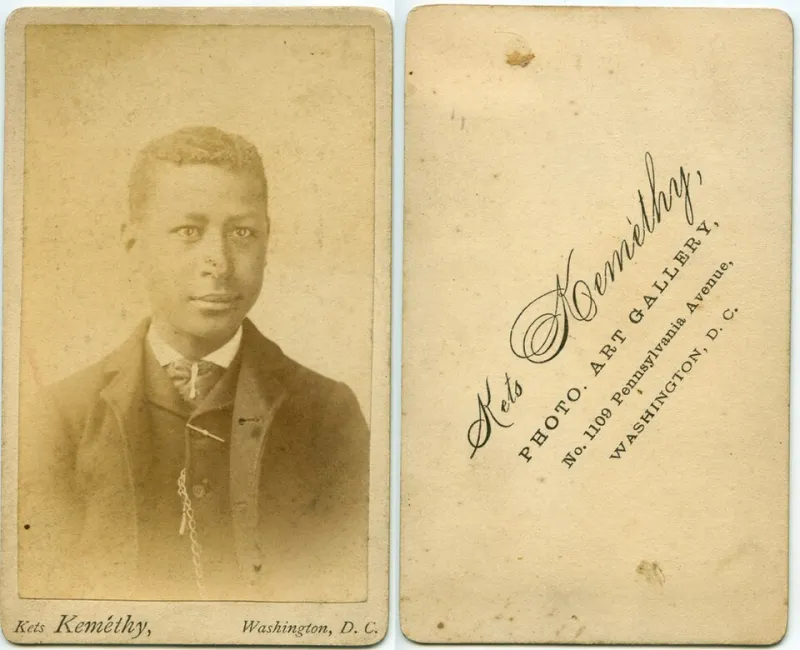
Dirt Roads to Wall Street: The Ranch Hand Who Took On America's Financial Titans
There's a particular kind of clarity that comes from never having belonged to something. You see the machinery for what it is — not the polished version that insiders sell each other, but the grinding, uneven reality underneath. Amos Kendall had that clarity in abundance. Raised in the kind of rural poverty that doesn't leave much room for illusion, he arrived at the edges of American financial power without a pedigree, without connections, and without the faintest intention of playing by anyone else's rules.
What he had instead was something rarer: the ability to look at a crooked system and describe it in plain language that ordinary people could understand.
A Childhood That Built the Wrong Kind of Man — or Maybe the Right One
Kendall grew up working the land, the kind of upbringing that leaves its marks in your posture and your hands long after you've moved on. Formal schooling was a luxury his family could rarely afford, and what education he cobbled together came from borrowed books, overheard conversations, and the hard-won lessons of watching other people get cheated and not knowing how to fight back.
In the early decades of the nineteenth century, rural America was a place where financial power felt abstract and distant — something that happened in cities, behind closed doors, between men who knew each other's names. The consequences, though, were anything but abstract. Families lost farms. Workers lost wages. The gap between those who controlled money and those who simply needed it was widening every decade, and very few people with any influence seemed particularly troubled by that.
Kendall was troubled by it. He just needed a way in.
The Unlikely Education of a Financial Reformer
What Kendall lacked in formal credentials, he compensated for with a ferocious appetite for information and an instinctive talent for communication. He found his way into journalism, which in the early American republic was less a profession than a form of combat — a space where arguments were settled in print and reputations were built or destroyed in a single editorial run.
He was good at it. More than good. He had the outsider's gift for stripping complex ideas down to their essential absurdity, and he deployed that gift against a target that richly deserved it: the Bank of the United States, an institution that functioned less like a public utility and more like a private club for the already-wealthy.
 Photo: Bank of the United States, via profit.pakistantoday.com.pk
The Bank — and the network of financial arrangements that surrounded it — had become a mechanism for concentrating power in ways that made ordinary economic participation nearly impossible for anyone without the right connections. Kendall understood this not because he'd studied economics in any formal sense, but because he'd seen what it looked like from the outside. He'd watched the machinery work against people like him his entire life.
The Outsider as Weapon
When Kendall found his way into the orbit of Andrew Jackson's political movement, his outsider status became a strategic asset rather than a liability. Jackson's war against the Bank of the United States is often told as a story about one man's stubborn populism, but the intellectual architecture of that campaign — the arguments, the framing, the language that made it legible to ordinary Americans — owed an enormous debt to Kendall's particular genius.
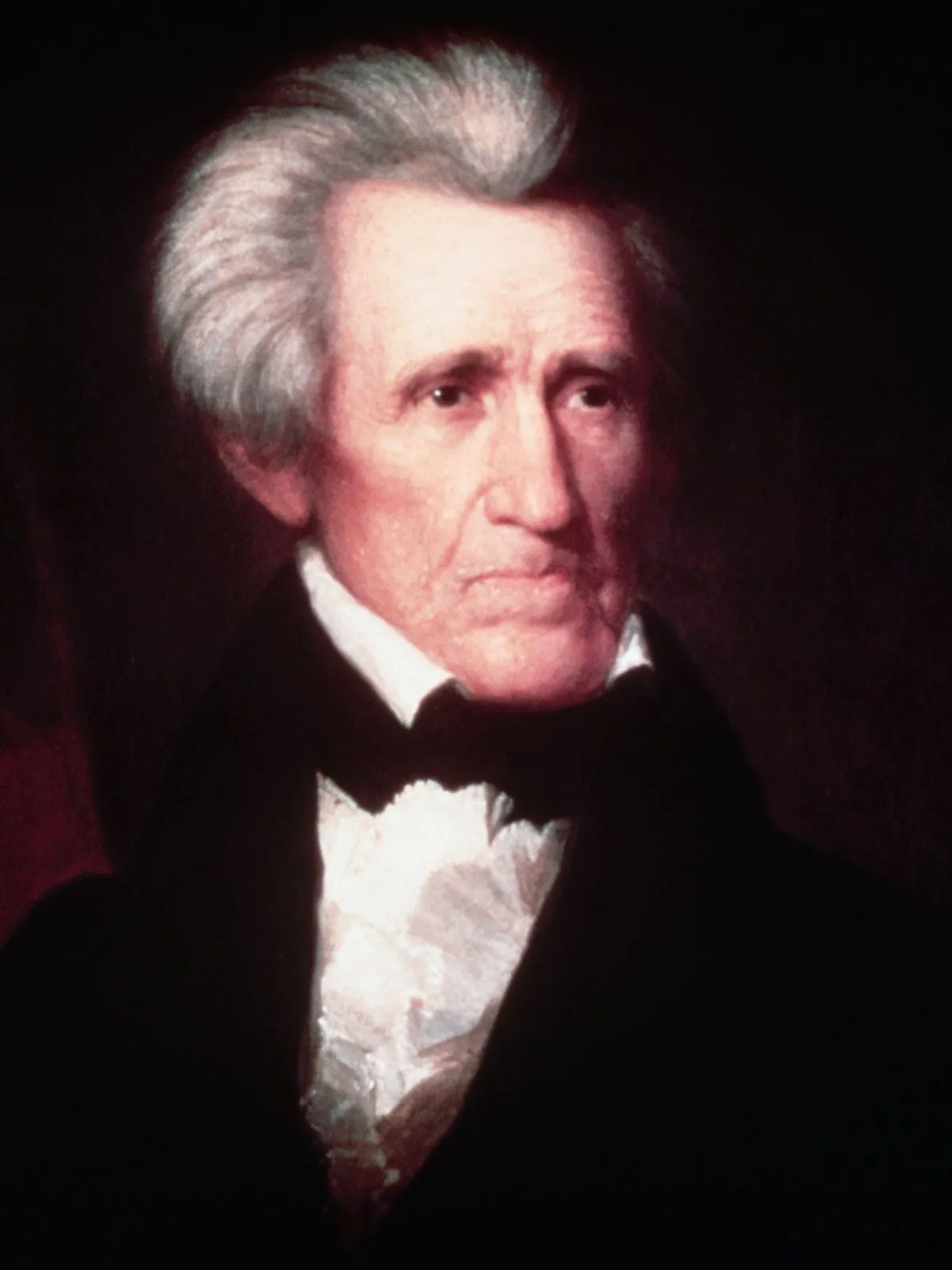 Photo: Andrew Jackson, via cdn.britannica.com
He became one of Jackson's most influential advisors, part of what critics dismissively called the "Kitchen Cabinet" — a circle of informal counselors who operated outside official channels. The name was meant as an insult, a suggestion that these men lacked the standing to participate in serious governance. Kendall wore it differently. He'd spent his whole life operating outside official channels. He knew exactly how much could be accomplished from there.
His writing during this period was something new in American public life: financial criticism that didn't require a financial education to follow. He explained the Bank's operations in terms that a farmer or a factory worker could grasp, and he made the stakes feel personal — because they were personal. The monopoly wasn't an abstraction. It was the reason your loan got called in. It was the reason the merchant in the next town could undercut your prices. It was the reason the system always seemed to tilt against you no matter how hard you worked.
What Insiders Miss
There's a well-documented phenomenon in organizational behavior sometimes called "insider blindness" — the tendency for people embedded in a system to normalize its dysfunctions because those dysfunctions have become part of the landscape. The longer you've operated inside something, the harder it becomes to see it clearly.
Kendall never had that problem. He came to American financial power as a stranger, and he never entirely stopped seeing it that way. The practices that insiders treated as simply how things worked struck him as obviously, almost offensively wrong. He didn't need a sophisticated theoretical framework to reach that conclusion. He just needed to ask who benefited and who didn't.
The Bank's charter was eventually not renewed, a victory that historians still argue about — some crediting it as a genuine democratizing moment, others pointing to the economic instability that followed. What's less debated is that Kendall's role in making that outcome politically possible was significant and, given his origins, improbable to the point of being almost fictional.
The Shape of an Unlikely Life
Kendall went on to other ventures — including a business partnership that helped build the infrastructure for the telegraph network, another technology whose implications he grasped more quickly than most of his contemporaries. He was a man who seemed to thrive at the edge of things, in the spaces where new possibilities hadn't yet hardened into established interests.
He died having accomplished more than almost anyone who knew him as a young man would have predicted. Not because he overcame his background, exactly, but because he used it. The distance between where he started and where he ended up wasn't an obstacle he had to clear. It was the source of everything that made him effective.
The people who grow up inside power learn to manage it. The people who grow up outside it learn to question it. And sometimes — not often, but sometimes — questioning it is exactly what the moment requires.
Kendall's story doesn't fit neatly into the usual American success narrative, the one where grit and talent lift a deserving individual into a comfortable place in an otherwise functioning system. His story is messier and more interesting than that. It's about what happens when someone who was never supposed to understand the system turns out to understand it better than anyone who built it.
The dirt roads he grew up on didn't lead to Wall Street by accident. They led there because someone who'd walked them had something to say that the marble corridors desperately needed to hear.