The Man Who Never Graduated — But Taught Every Doctor Who Did

Somewhere in a medical school library right now, a first-year student is hunched over a thick green volume, tracing the arc of a nerve with one finger. The illustrations are almost impossibly clear — muscle layered over muscle, vessels threading through tissue, everything color-coded and precise. The student probably doesn't know the artist's name. Most doctors don't. But the man behind those images, Frank Netter, may have done more to shape modern medicine than any physician who ever held a scalpel.
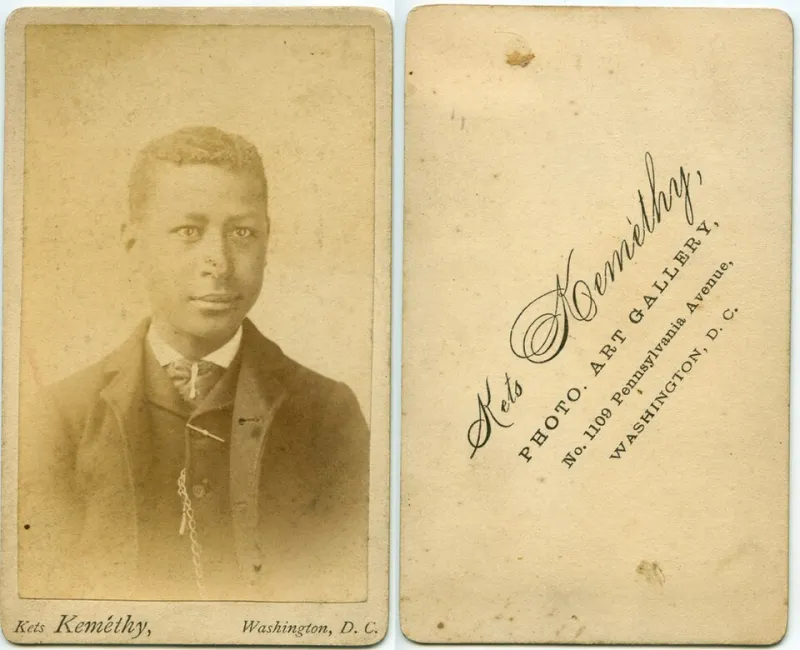
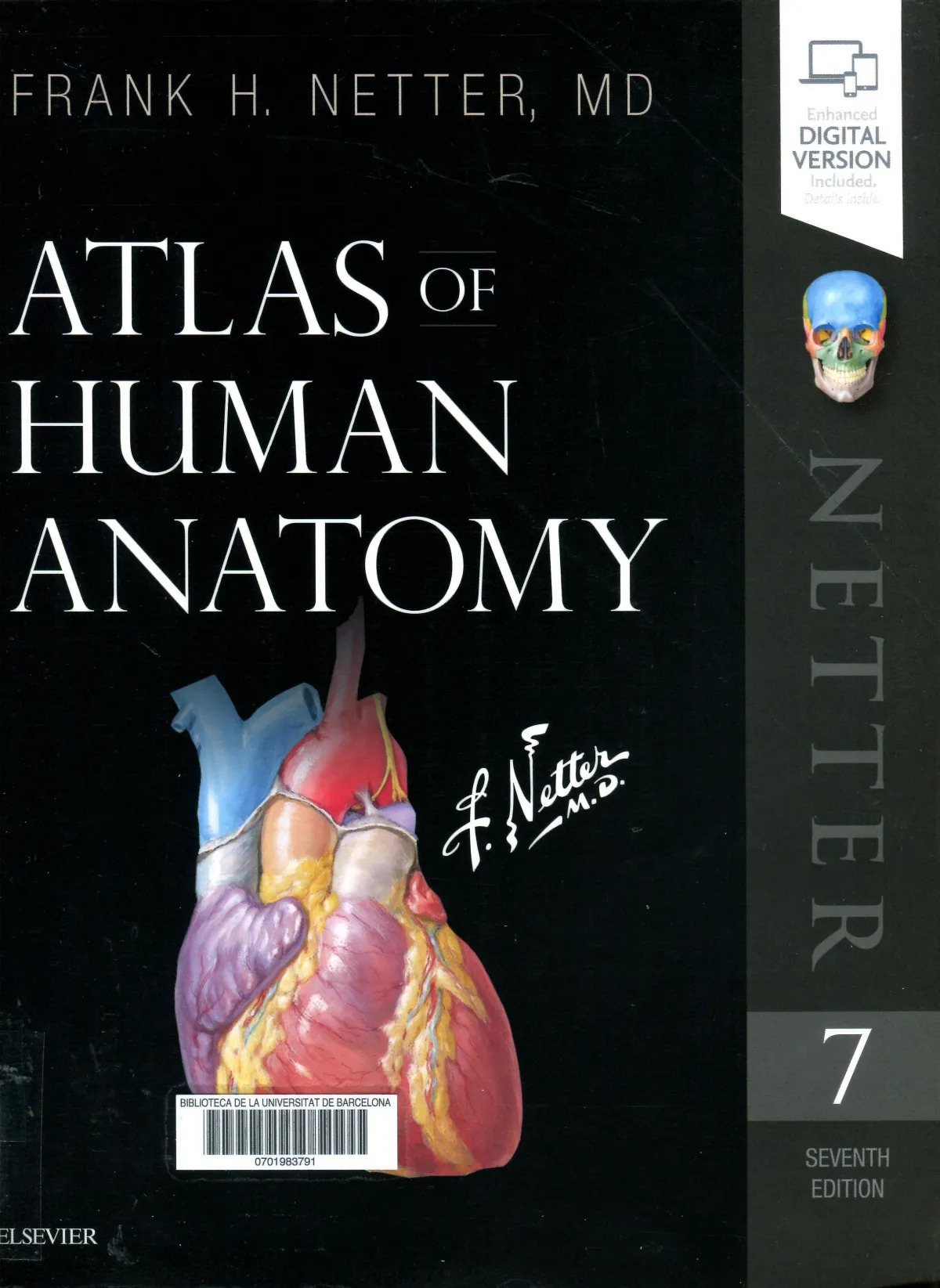 Photo: Frank Netter, via i.pinimg.com
The strange part? He was never supposed to be there at all.
A Foot in Two Worlds, Welcome in Neither
Frank Henry Netter was born in New York City in 1906, the son of a watchmaker. From the time he could hold a pencil, he drew constantly — people, animals, anything that sat still long enough. His parents weren't opposed to the habit, exactly, but they weren't encouraging either. Art was fine for weekends. Medicine was a career.
 Photo: New York City, via wallpapercave.com
Netter enrolled at New York University's medical school in the late 1920s, but the timing was terrible. The Great Depression hit hard, and by the early 1930s, he had run out of money to finish his degree. Rather than wait tables or take factory work, he did what came naturally: he started selling medical illustrations to supplement his income.
 Photo: New York University, via i.abcnewsfe.com
It was supposed to be temporary. It wasn't.
The pharmaceutical company CIBA — later Novartis — hired him in 1936 to produce anatomical images for their promotional materials. What started as a commercial arrangement slowly became something no one had planned. Netter began producing plates of such unusual clarity and depth that doctors started requesting them specifically. By the 1940s, CIBA had begun collecting his work into bound volumes distributed free to physicians across the country.
Netter had stumbled into a gap nobody knew existed.
The Problem With Perfect Knowledge
Here's the thing about formally trained medical illustrators: they know too much. A trained anatomist drawing the brachial plexus — the dense web of nerves running from the spine through the shoulder — tends to render it with complete technical accuracy. Every branch, every variation, every exception to the rule. The result is often overwhelming. Medical students stare at it, flip back two pages, and stare again.
Netter's outsider status gave him a different instinct. He had studied anatomy, yes, but he had also spent years trying to understand it as a learner, not as an expert. He drew the way a student needed to see, not the way a professor needed to show. He stripped away what was confusing without stripping away what was true. He understood, almost intuitively, that the goal wasn't documentation — it was comprehension.
He also had an artist's sense of drama. His figures weren't flat diagrams. They had posture, weight, presence. A cross-section of the heart in a Netter plate looks less like a schematic and more like something you could reach into. The clinical detail is all there, but it's arranged to guide the eye, to tell a story about how the body actually works.
That combination — the medical knowledge, the artistic instinct, the learner's empathy — turned out to be extraordinarily rare.
Green Covers and a Global Classroom
The Netter Collection of Medical Illustrations, those distinctive green-covered volumes, eventually grew to cover virtually every system in the human body. Cardiology. Neuroscience. Orthopedics. Reproductive medicine. Each volume ran to hundreds of plates, and each plate was the product of an almost obsessive process — Netter routinely consulted with leading specialists, sometimes revising a single image a dozen times before he was satisfied.
By the time the collection was complete, it had been translated into sixteen languages and distributed to medical schools on every inhabited continent. Generations of physicians in the United States, Europe, Asia, and Latin America learned anatomy from his hand. Many of them went on to teach using his images without ever learning who drew them.
Netter himself seemed unbothered by the anonymity. He worked until he was eighty-five, producing his final plates just before his death in 1991. In interviews, he often described himself as a doctor who illustrated rather than an artist who dabbled in medicine — a distinction that mattered to him, even if the world had sorted him differently.
What the Diploma Didn't Give Him
There's a tempting narrative here about the self-made man, the dropout who outperformed the credentialed. But Netter's story is more interesting than that. He didn't succeed despite his incomplete education. He succeeded because the gap between what he knew and what he wished he understood turned out to be exactly the gap his readers shared.
He was, in the most literal sense, drawing for himself — for the version of himself that had sat in lecture halls trying to visualize something no textbook had made clear. The empathy wasn't manufactured. It was biographical.
Most fields have a version of this problem: the person closest to the material forgets what it felt like not to understand it. Expertise can close doors that confusion once held open. Netter's particular combination of curiosity, partial knowledge, and artistic stubbornness kept those doors propped wide for half a century.
A Legacy Drawn in Quiet
Today, medical students still reach for Netter volumes the way earlier generations reached for Gray's Anatomy. Digital editions have updated some of the plates, added new imaging techniques, expanded the coverage. But the core visual language — that particular clarity, that sense of the body as something comprehensible rather than merely complex — is still his.
He never finished medical school. He never held a faculty position or ran a laboratory. He never saved a patient or published a clinical study. What he did was sit at a drafting table for fifty years and draw the human body the way he wished someone had drawn it for him.
As legacies go, it's not a bad one. Every doctor who has ever looked at one of those green volumes and finally understood something — and there are millions of them — owes a quiet debt to a New York watchmaker's son who couldn't afford to finish his degree and was too stubborn to stop drawing.