From Dishpan to Operating Room: The Immigrant Who Rewrote the Rules of Heart Surgery
The Man Nobody Noticed
In 1962, a young Dominican man named Domingo Liotta stepped off a Greyhound bus in Houston with $47 in his pocket and a medical degree nobody in Texas would recognize. The hospitals wouldn't hire him. The clinics wouldn't return his calls. So he did what desperate people do — he took whatever work he could find.
For eight months, Liotta washed dishes at a downtown restaurant, his hands raw from industrial soap, his mind racing with ideas about mechanical hearts that seemed impossibly far from the greasy plates he scrubbed each night. The other dishwashers called him "Doctor" as a joke. They had no idea how prophetic that nickname would prove to be.
What happened next would reshape cardiac surgery in America, but it didn't happen in a gleaming research facility or a prestigious medical school. It happened in a converted garage, with borrowed equipment and the kind of desperate innovation that only comes from having absolutely nothing to lose.
The Basement Breakthrough
Liotta's break came through pure persistence. After months of rejections, he finally convinced a small clinic to let him observe surgeries in exchange for janitorial work. He mopped floors during the day and studied surgical techniques at night, filling notebook after notebook with sketches of mechanical devices that could replace failing hearts.
The medical establishment in Houston was polite but dismissive. This was 1963, and artificial hearts were the stuff of science fiction. The few attempts had ended in spectacular failure. Who was this dishwasher-turned-janitor to think he could solve what America's best cardiac surgeons couldn't?
But Liotta had something his critics lacked: the outsider's willingness to ignore conventional wisdom. While established researchers focused on complex electronic systems, he was sketching simple mechanical pumps inspired by the industrial equipment he'd grown up around in the Dominican Republic. His designs looked primitive compared to the high-tech approaches being pursued at major medical centers, but they had one crucial advantage — they actually worked.
The Partnership That Changed Everything
In 1964, Liotta's relentless networking finally paid off. He met Denton Cooley, the ambitious cardiac surgeon who would later become a household name, at a medical conference where Liotta was working as a translator. Cooley was intrigued by this soft-spoken immigrant who spoke about artificial hearts with the confidence of someone who'd actually built one.
 Photo: Denton Cooley, via img-s-msn-com.akamaized.net
What Cooley didn't know was that Liotta had been building prototypes in his apartment's basement, using materials scrounged from medical supply companies and machine shops around Houston. His landlord thought he was running some kind of illegal laboratory. His neighbors complained about the noise from his makeshift testing equipment. But Liotta kept working, driven by memories of patients he'd watched die in Santo Domingo hospitals that lacked even basic cardiac care.
The partnership between Cooley and Liotta was electric from the start. Cooley provided the surgical expertise and institutional credibility; Liotta brought the mechanical genius and outsider's perspective that establishment medicine desperately needed. Together, they began developing what would become the world's first successful artificial heart.
The Night That Made History
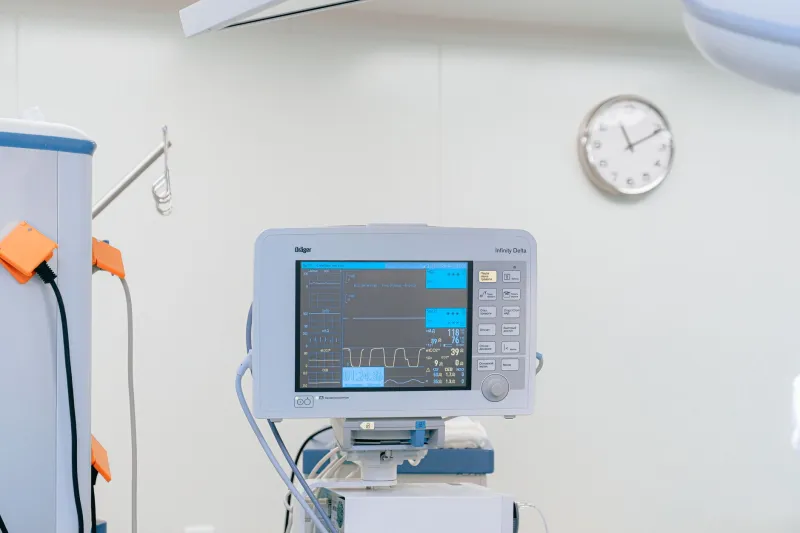
On April 4, 1969, everything came together in operating room 8 at St. Luke's Hospital in Houston. The patient was Haskell Karp, a 47-year-old man whose heart was failing beyond repair. Cooley made the surgical incisions, but it was Liotta's device — refined through years of basement experimentation — that kept Karp alive for 64 crucial hours while they waited for a donor heart.
 Photo: St. Luke's Hospital, via chaletenbois.fr
Those 64 hours changed medical history. For the first time, a mechanical device had successfully replaced a human heart for an extended period. The artificial heart, barely larger than a softball and weighing just over a pound, proved that Liotta's simple mechanical approach could work where more complex systems had failed.
The medical world was stunned. Here was a breakthrough that had emerged not from a prestigious research university, but from the collaboration between an ambitious surgeon and an immigrant who'd started his American journey washing dishes. The device that made it possible had been perfected in a basement laboratory that most medical professionals would have dismissed as amateur hour.
The Legacy of Unlikely Innovation
Liotta's artificial heart didn't just save Haskell Karp's life — it opened the door to modern cardiac surgery as we know it today. His mechanical designs became the foundation for the heart pumps and artificial devices that now save thousands of lives each year. The simple, reliable approach he pioneered in his basement laboratory is still evident in today's most advanced cardiac equipment.
But perhaps more importantly, Liotta's story illustrates how breakthrough innovation often comes from the most unexpected places. While establishment medicine was focused on incremental improvements to existing approaches, a dishwasher-turned-inventor was quietly developing the radical solution they needed.
Today, Domingo Liotta is recognized as one of the pioneers of artificial organ development. Medical schools teach his techniques. Cardiac surgeons around the world use devices based on his designs. But his journey from dishpan to operating room remains one of the most unlikely success stories in American medical history — proof that sometimes the most important discoveries come from people who are just desperate enough to ignore what everyone else says is impossible.
The next time you hear about a medical breakthrough, remember the Dominican immigrant who washed dishes by day and built artificial hearts by night. Sometimes the most extraordinary achievements come from the most ordinary beginnings, and the greatest innovations emerge from people who have nothing left to lose and everything to prove.