Stitched by Candlelight: The Widow Who Made the Flag That Made America
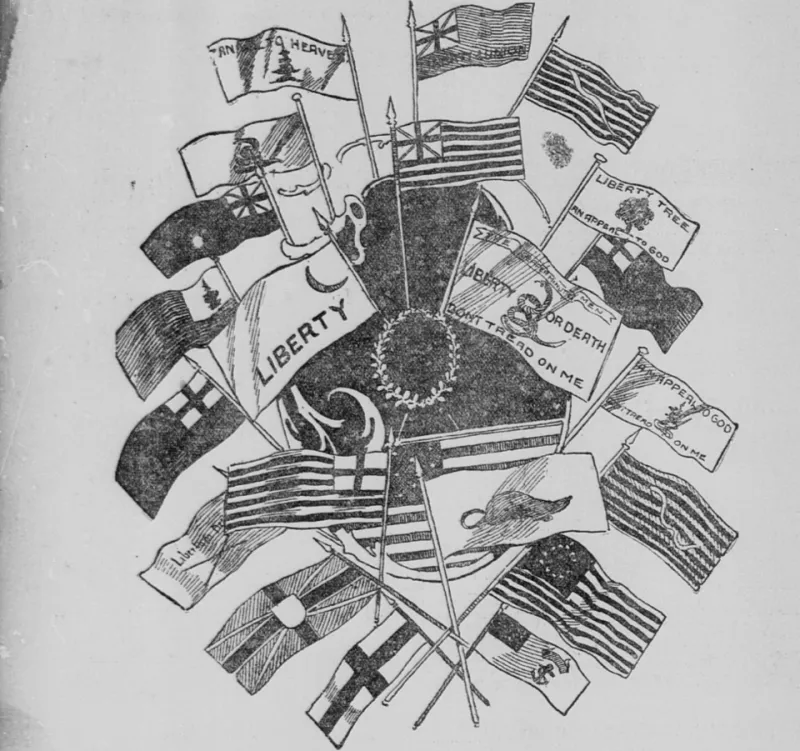
Photo: Salt Lake Herald | 1896-07-02 | Page 10, CC0, via Wikimedia Commons
Every American knows the image. Fifteen stars. Fifteen stripes. A flag so enormous it took a brewery floor to lay it flat. It flew over Fort McHenry during the British bombardment of Baltimore in 1814, survived the night, and inspired Francis Scott Key to scribble the lines that eventually became the national anthem. You can see it today at the Smithsonian — faded, fragile, one of the most visited objects in American history.
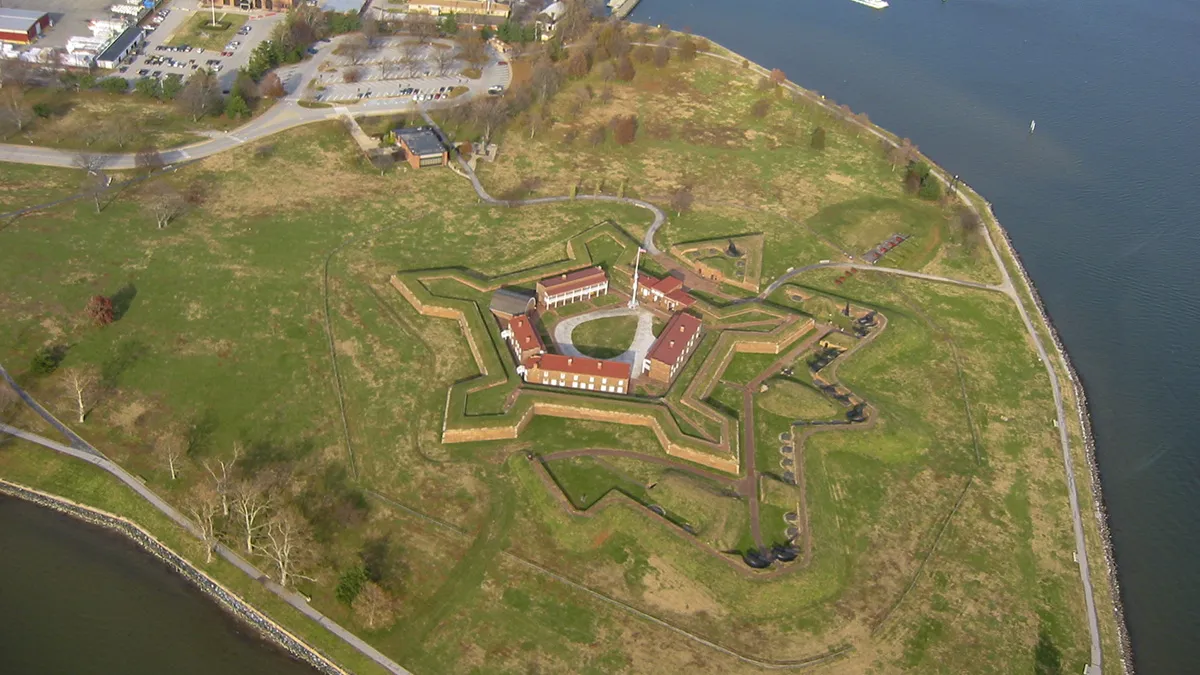 Photo: Fort McHenry, via www.tclf.org
Most visitors don't know who made it. Her name was Mary Pickersgill, and her story is as American as the flag itself.
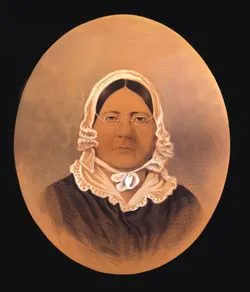 Photo: Mary Pickersgill, via americanhistory.si.edu
A Trade Passed Down in Thread
Mary Young Pickersgill was born in Philadelphia in 1776 — the year, as it happens, that the country whose symbol she would one day create declared its independence. Her mother, Rebecca Young, was a flag-maker who had supplied military standards to Continental Army forces during the Revolutionary War. Mary grew up watching her mother work, learning the trade by proximity the way most skills were taught in that era: by doing, by watching, by repetition.
When Mary's husband, John Pickersgill, died young, she did what her mother had done before her — she turned her skill into a livelihood. She moved to Baltimore with her daughter, set up a flag-making business on Albemarle Street, and built a modest but steady reputation supplying flags to the ships that moved through Baltimore's busy harbor. She was practical, reliable, and precise. In the flag trade, those qualities mattered more than inspiration.
By 1813, she was well-regarded enough that her name reached the desk of Major George Armistead, the commander of Fort McHenry, when he put out a request for something ambitious.
An Impossible Order
Armistead wanted a flag so large that the British would have no trouble seeing it from a distance. He wanted a statement, not a signal. The specifications he submitted were extraordinary: a garrison flag measuring thirty feet by forty-two feet, with stars two feet across and stripes two feet wide. It would require roughly four hundred yards of bunting, weigh close to fifty pounds when finished, and be the largest flag anyone in the region had ever been asked to produce.
Mary Pickersgill took the contract. She was paid $405.90 for the garrison flag — a significant sum, but not a windfall, given the materials and labor involved. She enlisted her thirteen-year-old daughter Caroline, her two nieces, and a young indentured servant named Grace Wisher to help with the work.
The flag was too large to lay out in her house. A neighbor, the proprietor of Claggett's Brewery on nearby Tremont Street, allowed her to use the malt house floor after hours. Night after night, by the light of candles and lanterns, the women spread the pieces of the flag across the wooden floor, cut and matched the sections, and stitched them together by hand.
There were no power tools. No industrial sewing machines. Just needles, thread, and the patience to do the work correctly.
The Craft Behind the Myth
It's worth pausing on the physical reality of what Pickersgill accomplished, because the scale is genuinely staggering. Each of the fifteen stars had to be cut from white wool bunting and appliquéd onto the blue canton — a process that required cutting, positioning, pinning, and hand-stitching every point of every star with enough precision that the finished result would be symmetrical from hundreds of feet away. The stripes, alternating red and white, had to be sewn with even seams across a combined length that would stretch the length of a modern school gymnasium.
The wool bunting was heavy and stiff. Working on the floor meant hours of kneeling, bending, and crawling across the surface of the flag. The candles provided enough light to see by, barely, and the summer heat in the malt house would have been considerable.
Mary Pickersgill was not working in service of a grand patriotic vision. She was filling a government contract, doing her job with the professionalism she had spent a lifetime developing. She finished the flag in approximately seven weeks.
One Night in September
The flag flew over Fort McHenry for the first time in the summer of 1813. A year later, on the night of September 13, 1814, the British Royal Navy opened a bombardment of the fort that lasted through the night and into the following morning. More than fifteen hundred shells and rockets fell on the fortification over roughly twenty-five hours.
Francis Scott Key, a lawyer who had been detained on a British ship during negotiations for a prisoner exchange, watched the bombardment from the water. At dawn, he looked toward the fort and saw the flag still flying. He began writing on the back of a letter.
Key's poem, originally titled "Defence of Fort M'Henry," was set to music and published within weeks. It circulated through the young nation with remarkable speed. The image of the flag surviving the night — of that specific flag, enormous and deliberate and unmistakable — became the emotional center of the story.
Mary Pickersgill was not at the fort that night. She was a civilian contractor, a working widow with a business to run. Her part in the story had ended when she delivered the flag and collected her payment.
What Outlasts the Famous
The generals and politicians of the War of 1812 are mostly historical footnotes now. The treaty that ended the war, the battles that preceded it, the diplomatic maneuvering that surrounded it — these are the province of historians and dedicated students. But the flag endures in a way that transcends the conflict it survived.
And so, in the quietest possible way, does Mary Pickersgill.
For most of the nineteenth century, her role in making the flag was barely acknowledged. The Smithsonian acquired the flag in 1907, and it took decades of careful historical work to firmly establish Pickersgill's authorship. The malt house where she worked was eventually demolished, though a reconstruction now stands in Baltimore as a museum in her honor. The house on Albemarle Street where she ran her business still exists, preserved as a historic site.
She lived until 1857, long enough to see the flag become a national symbol, long enough to watch the country she had served without fanfare grow into something vast and complicated and still, in moments of crisis, in need of something to look toward.
She spent her later years running a charitable organization that provided support to poor women in Baltimore — the same quiet, practical generosity that had characterized her whole working life. She never sought credit for the flag. By most accounts, she didn't think of it as a monument. It was a job she had done well.
That, too, is a very American story.
The Needle and the Nation
There's something worth sitting with in the image of Mary Pickersgill on her hands and knees on a brewery floor, stitching by candlelight, a thirteen-year-old daughter working beside her. No ceremony. No audience. No sense of the history accumulating stitch by stitch beneath her hands.
The great symbols of nations are usually attributed to the powerful — the generals who win the battles, the politicians who sign the documents, the poets who write the words. But the objects themselves, the physical things that carry meaning across generations, are almost always made by someone whose name you have to look up.
Mary Pickersgill made the flag. The flag made the anthem. The anthem made something that two hundred years of Americans have reached for when they needed to remember what they were reaching toward.
Not bad for a widow with a needle and a brewery floor.