She Wasn't Hired by Anyone — So She Saved American Music Herself
The Rejection Letters Kept Coming
By 1938, Dorothy Canfield Voss had collected enough rejection letters to wallpaper a small room. The Library of Congress wasn't interested. The Smithsonian had no position for her. University folklore departments politely explained that their archives were fully staffed — which, in most cases, meant they had one person doing the job of six.
Dorothy was not a credentialed academic. She had no advanced degree in ethnomusicology, a field that was itself barely organized at the time. What she had was a portable wire recorder, a 1934 Ford that she'd learned to service herself, and a conviction — quiet but immovable — that something irreplaceable was disappearing from the American landscape faster than anyone in an institution had noticed.
She was right. And because nobody would pay her to do the work, she paid for it herself.
A Self-Made Education
Dorothy grew up in eastern Tennessee, the daughter of a schoolteacher and a sawmill operator, in a household where music was as ordinary as weather. Shape-note hymns on Sunday. Ballads on the porch after supper. The older men in her community still knew songs their grandparents had carried from Scotland and Ireland, filtered through two centuries of Appalachian life until they were something entirely new.
She studied music informally — no conservatory, no formal theory — but she listened with the precision of a scientist. When she enrolled at a small teacher's college in the early 1930s, she wrote her senior thesis on the oral transmission of ballads in isolated mountain communities. Her professor called it "thorough but impractical." She took that as encouragement.
After graduation, with no academic position available and no institutional home for her interests, Dorothy did something that seems obvious in retrospect and was almost unheard of at the time: she decided to go find the music herself.
The Road as Archive
Between 1936 and 1951, Dorothy logged an estimated 60,000 miles across the American South and Midwest. She drove through the Mississippi Delta during the height of the blues era, through the Ozarks when string band traditions were still living memory rather than historical artifact, through Texas and Louisiana and the Carolina Piedmont. She knocked on doors, sat on porches, attended church services and fish fries and Saturday night dances.
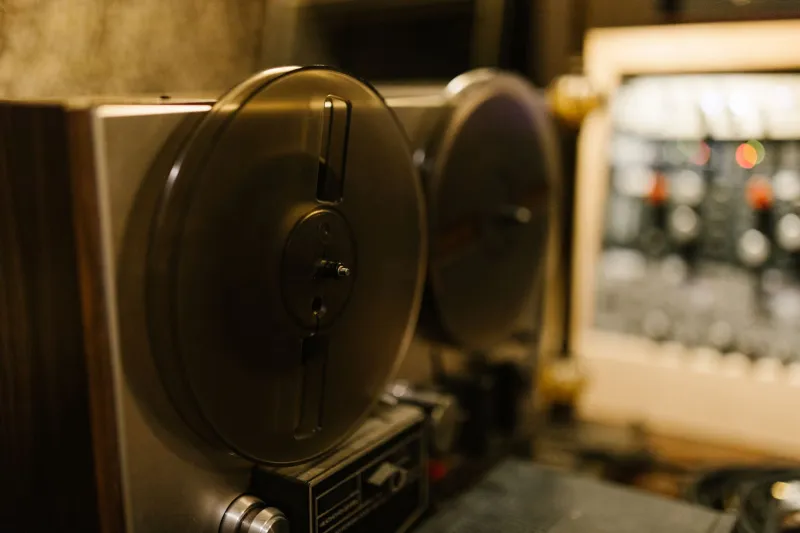
Her recording setup was awkward by any standard. The wire recorder was heavy, temperamental in humidity, and required a generator she kept in the car's trunk. She learned to fix it herself after a repair shop in Memphis charged her a week's budget for a job she could've done with a screwdriver and twenty minutes.
What she captured was extraordinary. Field recordings of bluesmen who would never record commercially. Sacred harp singers in congregations that had maintained their practice unchanged since the 18th century. Fiddle tunes that existed in no published collection anywhere. Work songs, lullabies, play-party songs, ballads that traced a direct line back to medieval England through the specific gravity of American experience.
She cataloged everything by hand — performer, location, date, context, instrumentation, lyric variations. Her indexing system, developed in the margins of composition notebooks, was idiosyncratic but remarkably complete. Researchers who later worked with her collection described it as "the most thorough single-person archive in American vernacular music."
The Institutions That Weren't Looking
The bitter irony of Dorothy's story is that the institutions that had rejected her were, in some cases, nominally doing the same work. The Library of Congress had its own folk song project, famously associated with figures like John and Alan Lomax. That project was real, valuable, and well-documented.
It was also selective in ways that Dorothy's work was not. The Lomax recordings concentrated on performers who fit a particular narrative of American folk authenticity. Dorothy's archive was more democratic and more chaotic — she recorded whoever was there, whatever they were willing to share, with less editorial curation and more sheer accumulation.
The result was a collection that captured the edges and overlaps of American vernacular music: the places where blues shaded into gospel, where Scots-Irish ballad tradition had absorbed African rhythmic patterns, where commercial country music and sacred tradition were still negotiating their relationship. It was messier than the institutional archives. It was also, in certain ways, more complete.
Rediscovery, Late and Incomplete
Dorothy spent the 1950s and 1960s in relative obscurity, working as a music teacher in a small Tennessee town, maintaining her archive in a converted barn behind her house. She occasionally corresponded with researchers who'd heard about her work through word of mouth. She published one slim, self-funded volume of transcribed ballads in 1962 that sold perhaps 400 copies.
The rediscovery came in pieces. A young ethnomusicologist encountered references to her collection in the mid-1970s and tracked her down. What he found — thousands of recordings, meticulous documentation, a lifetime's worth of contextual notes — took years to fully process. A university archive eventually acquired the collection. A series of LP compilations in the late 1970s and early 1980s brought some of the recordings to wider attention.
Musicians who built careers on the folk revival of the 1960s and the country-blues crossover of the 1970s were quietly building on a foundation Dorothy had laid. Some knew it. Most didn't. The music had traveled without her name attached.
The Shape of an Uncommon Life
Dorothy Canfield Voss died in 1987, well before the full scope of her contribution was understood. She never held an academic appointment, never received a major institutional grant, never appeared on a stage or in a documentary. Her name is known today primarily to specialists.
But the music she saved — the songs she drove tens of thousands of miles to capture before they vanished — is still circulating. It lives in samples, in covers, in the chord progressions of artists who learned it from people who learned it from recordings that exist only because one woman with a wire recorder and a reliable stubbornness decided that the work mattered even when nobody would pay her to do it.
Some archives get built by institutions. Some get built by one person who simply refuses to let things disappear.