Feeling the Beat: The Deaf Percussionist Who Taught the World to Listen Differently
The first time Evelyn Hartwell pressed her palms flat against a bass drum and felt it fire, she was nine years old and standing in the gymnasium of a rural Indiana elementary school. She had been profoundly hard of hearing since the age of four, following a bout of meningitis that stripped away roughly eighty percent of her hearing. Her parents had spent years navigating audiologists, hearing aids, and the particular exhaustion of raising a child who moved through the world at a frequency most people couldn't access.
What nobody anticipated was that the frequency Evelyn could access was the one that ran through the floor.
A Different Kind of Listening
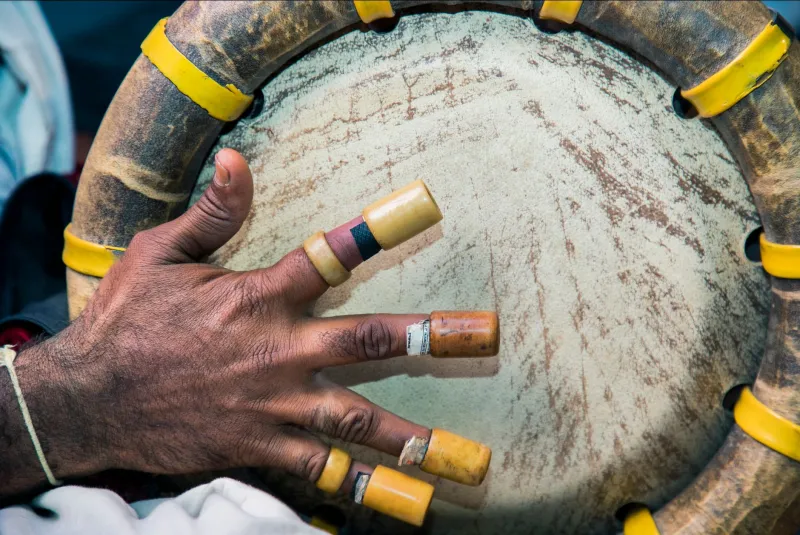
Percussion, for most musicians, is about sound — the crack of a snare, the bloom of a cymbal, the deep thud of a kick drum measured in decibels and reverb. For Hartwell, it was always something else first: pressure, pulse, and the way vibration traveled through wood and skin and bone. She couldn't hear a drum the way her bandmates did, but she could feel it in ways they had never thought to try.
She began formal percussion lessons at twelve, working with a teacher in Indianapolis who was skeptical but willing. Within two years, she had outpaced every student in the program. Not because she was compensating for her hearing loss — but because she was using it. While other students focused on how things sounded, Hartwell was mapping how they moved. She developed an instinct for the physical weight of rhythm, the way a strike slightly off-center produces a subtly different vibration pattern than one landed dead on the drum's sweet spot.
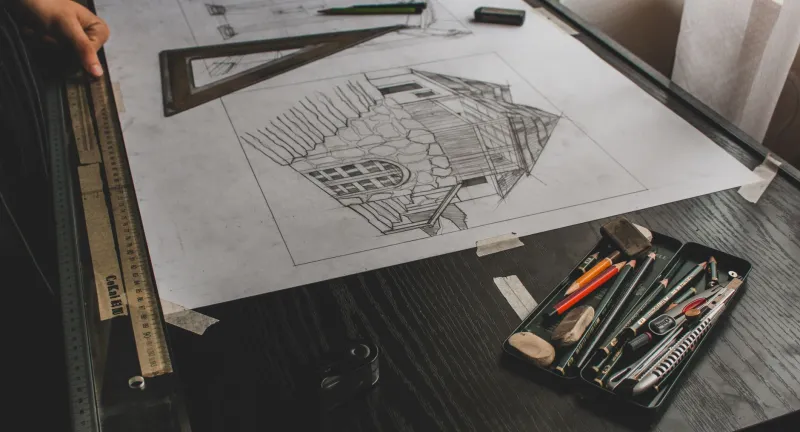
She started keeping notebooks. Not sheet music — diagrams. Drawings of where on a drum surface a mallet should land to produce maximum resonance through the floor. Sketches of how to position the body to feel a snare through the chest rather than the ears. She was building, entirely self-taught, a haptic theory of percussion that had no name and no precedent.
The Instrument Nobody Had Built Yet
By the time Hartwell enrolled at the Cleveland Institute of Music in the late 1980s — one of the few conservatories willing to admit a student with significant hearing loss — she had already begun sketching instruments that didn't exist. She was frustrated by how little of the percussion world had been designed with vibration transmission in mind. Most drums were built for sound projection outward. She wanted instruments that also sent rhythm downward and inward, through the player's body.
Working with a luthier she found through a classified ad in a Cleveland alt-weekly, she spent three years building a series of modified frame drums fitted with contact microphones and transducers that converted sound into tactile vibration. The instruments looked unusual — thicker frames, weighted rims, custom mounting brackets — but the effect was startling. Players who tried them reported feeling rhythms in their hands and forearms that they had never consciously registered before.
She called the project Groundwork. It was not, she insisted, assistive technology for deaf musicians. It was a new tool for all musicians — a way of accessing rhythm through a sense that hearing players had been ignoring their entire careers.
When the Academy Noticed
Hartwell's Groundwork instruments were first demonstrated publicly at a small percussion festival in Columbus in 1994. The response was divided, which is to say that the older attendees were baffled and the younger ones were electrified. Within a year, she had been invited to present at two university music departments. Within three, she had a modest grant from the National Endowment for the Arts and a residency at a Chicago studio.
The compositional techniques she developed alongside the instruments were arguably more influential than the hardware itself. Hartwell began writing percussion pieces that included explicit instructions for players to feel specific elements of the score rather than only hear them — pieces that asked musicians to press a palm to a drum head during a rest, to notice the decay of a vibration through the floor, to play with eyes closed and focus entirely on physical sensation.
These techniques filtered into mainstream music education slowly, then all at once. By the early 2000s, her methods were appearing in percussion pedagogy curricula at Berklee, at Juilliard's music education program, and in workshops run by the Percussive Arts Society. Instructors who had never met Hartwell were teaching her ideas without always knowing where they'd originated.
The Sound of a Different Frequency
There is a tendency, when telling stories like Hartwell's, to frame the narrative as triumph over adversity — as if deafness were the obstacle and success the proof that she overcame it. Hartwell spent much of her career pushing back against that framing. In interviews and lectures, she was consistent: her hearing loss was not a hurdle she cleared. It was the condition that made her work possible.
Hearing musicians, she argued, were trained from childhood to trust their ears above everything else. That trust, however reliable, was also a kind of narrowness. It meant that vast amounts of sonic and rhythmic information — the stuff that lives in vibration rather than air pressure waves — went perpetually unexamined. She had never had the option of relying solely on her ears. So she built a different kind of attention, one that turned out to contain information the field had been missing for centuries.
She performed and recorded well into her fifties, eventually losing the remainder of her functional hearing in her early forties. She described the transition as quieter than expected. The drums, she said, still had plenty to say.
Her final album, released in 2009, was titled Contact — named for the point at which a mallet meets a drum head, the precise instant where intention becomes vibration becomes, for those willing to feel it, something very much like music.