From Symphony to Stars: The Kitchen Hand Who Rewrote the Universe
The Musician Who Couldn't Make Ends Meet
In 1757, a nineteen-year-old German oboist named William Herschel arrived in England with empty pockets and a head full of musical ambitions. The reality of immigrant life hit hard. Between sporadic gigs playing in local orchestras, Herschel scrubbed dishes in taverns, gave piano lessons to bored aristocratic children, and copied sheet music by candlelight for pennies.
 Photo: William Herschel, via guidetovegan.com
By day, he was just another foreign musician scrambling for work in Georgian England's competitive musical landscape. But something extraordinary was happening in the margins of his survival.
When Hobbies Become Obsessions
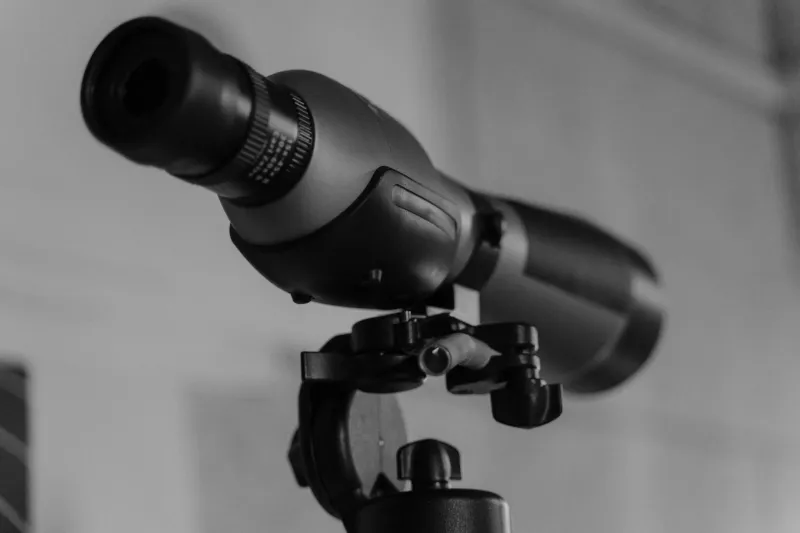
Herschel had developed what his neighbors considered an eccentric nighttime ritual. After finishing his musical duties, he would retreat to his small rented rooms and grind telescope mirrors by hand. This wasn't casual stargazing—this was methodical, almost manic craftsmanship.
Using techniques he taught himself from astronomy books, Herschel spent months perfecting each mirror, testing focal lengths, and building telescopes that surpassed anything available commercially. His sister Caroline later wrote that he would work on his mirrors for sixteen hours straight, pausing only when she forced food into his hands.
What started as curiosity had become something closer to compulsion. While other musicians spent their free time in taverns or pursuing paying students, Herschel was mapping the night sky with homemade instruments that cost him every spare shilling.
The Night That Changed Everything
March 13, 1781, started like any other evening. Herschel had finished teaching lessons and settled into his usual routine of systematic sky observation. He was methodically cataloging double stars—pairs of stars that appear close together—when something in the constellation Gemini caught his attention.
Through his handcrafted telescope, one "star" looked wrong. It appeared as a small disk rather than a point of light, and over successive nights, it seemed to move against the background of fixed stars.
Herschel initially thought he'd discovered a comet, which would have been exciting enough for an amateur astronomer. But as professional astronomers across Europe began calculating its orbit, something unprecedented emerged: this wasn't a comet at all. It was a planet—the first new planet discovered in recorded human history.
The Dishwasher Who Doubled the Solar System
The discovery of what would eventually be named Uranus didn't just add another celestial body to astronomy textbooks. It fundamentally changed humanity's understanding of the scale of our solar system. Uranus orbits twice as far from the Sun as Saturn, effectively doubling the known size of our cosmic neighborhood overnight.
For Herschel, the professional transformation was equally dramatic. King George III, delighted that a planet had been discovered from English soil, awarded him an annual pension of £200—enough to abandon music lessons forever and become a full-time astronomer.
But perhaps more remarkably, Herschel's discovery validated something profound about the nature of scientific breakthrough. Here was a man with no formal astronomical training, working with equipment he'd built himself in his spare time, who had accomplished what centuries of professional astronomers had missed.
Building an Empire from Spare Change
Herschel's story didn't end with Uranus. His pension allowed him to build increasingly sophisticated telescopes, and his systematic approach to observation revolutionized astronomy. He discovered two moons of Uranus, several moons of Saturn, and cataloged thousands of nebulae and double stars.
Working alongside his sister Caroline—herself a remarkable astronomer who discovered several comets—Herschel essentially founded modern stellar astronomy. His telescopes became so renowned that he supplemented his royal pension by selling them to observatories across Europe.
The immigrant musician who once washed dishes to survive had built the most advanced telescopes of his era and fundamentally expanded human knowledge of the universe.
The Margins Where Magic Happens
Herschel's story illuminates something crucial about how breakthrough discoveries actually occur. While established astronomers worked within accepted frameworks, using traditional methods and conventional equipment, the real revolution came from someone working entirely outside the system.
His lack of formal training wasn't a disadvantage—it was liberation. He wasn't constrained by academic orthodoxy about what was worth observing or how observations should be conducted. His systematic, almost obsessive approach to mapping the sky allowed him to notice things that more "qualified" astronomers had overlooked for centuries.
The dishwasher-turned-discoverer reminds us that transformative insights often emerge not from the center of established institutions, but from the passionate persistence of people working in the margins, driven by curiosity rather than career advancement.
William Herschel's journey from struggling immigrant musician to royal astronomer proves that sometimes the most extraordinary discoveries happen when someone with nothing to lose decides to build something extraordinary in their spare time. The universe, it turns out, was just waiting for someone curious enough to look up and persistent enough to keep looking.