No Words, All Music: The Polish Immigrant Who Taught Chicago to Hear Itself

Photo: Ken Lund from Reno, Nevada, USA, CC BY-SA 2.0, via Wikimedia Commons
Language is a gatekeeper. It decides who gets to participate, who gets to explain themselves, who gets taken seriously in the rooms where decisions are made. Stefania Woytasik arrived in Chicago in 1924 knowing almost none of the language that controlled access to those rooms, and for a long time, that felt like the most pressing fact about her situation.
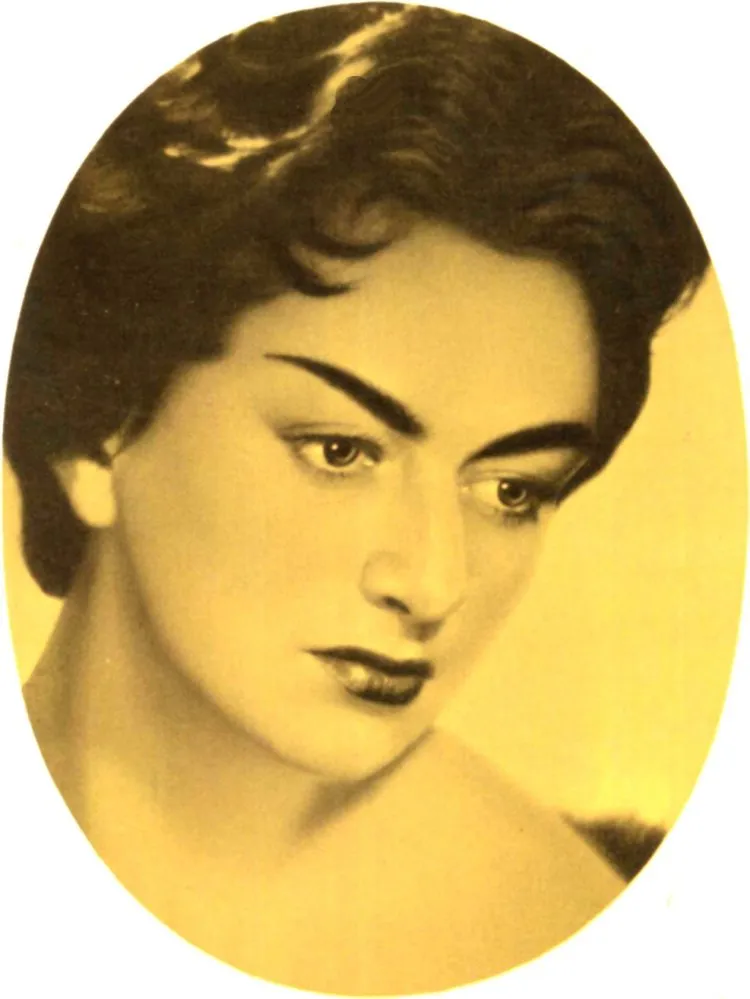 Photo: Stefania Woytasik, via www.bach-cantatas.com
It turned out to be one of the least important ones.
What Woytasik had — and what no language barrier could touch — was an understanding of music that went deeper than notation or theory or any of the formal vocabulary that conservatories spent years teaching. She understood it as a physical thing, a social thing, something that happened between people rather than being delivered by one person to another. And she had a gift for making that understanding contagious.
By the time anyone thought to write down what she was doing, it had already changed a neighborhood.
Arriving With Nothing Except Everything That Mattered
The South Side of Chicago in the 1920s was a place of constant, overlapping arrivals — migrants from the American South, immigrants from Eastern Europe, communities stacking themselves into the same geography and figuring out, block by block, how to coexist. It was loud and crowded and frequently overwhelming, and it was also, for anyone paying attention, one of the most creatively fertile environments in the country.
Woytasik found work as a seamstress, which was what Polish immigrant women with limited English found in Chicago in that era. She was good at it — patient, precise, capable of holding complicated patterns in her head — but it was never the center of her life. The center of her life was music, specifically the folk and liturgical traditions she'd carried from Poland, and the problem of what happened to those traditions when the context that had sustained them was suddenly, entirely gone.
She started small. A neighbor's child who had nothing to do after school. A few instruments she'd made herself from materials that cost almost nothing — stretched membranes, resonating chambers constructed from salvaged wood, simple string instruments that could be tuned by ear. A corner of a church basement whose priest asked very few questions about what she was planning.
Teaching Without a Common Language
The first thing Woytasik discovered was that not speaking the same language as her students was less of an obstacle than she'd feared. Music, it turned out, required very little explanation when it was approached the right way. You demonstrated. You listened. You responded to what you heard and invited the student to respond to what they heard. The feedback loop was immediate and physical in a way that verbal instruction rarely managed to be.
She couldn't tell a child that their rhythm was slightly off. She could play alongside them until their rhythm adjusted to match hers. She couldn't explain the concept of harmony in English. She could hum a second line against a melody a child was picking out and watch understanding register on their face without a word being exchanged.
This wasn't a method she'd designed. It was a method she'd arrived at because she had no other option. But what she discovered, working in that church basement with a rotating cast of neighborhood children, was that the absence of verbal explanation forced both her and her students to listen more carefully. Without language to fall back on, everything had to be communicated through sound itself.
Decades later, music educators would develop elaborate theoretical frameworks for exactly this approach — the idea that active listening and physical engagement should precede formal notation, that music should be experienced before it is analyzed. Woytasik got there first, not because she'd read the research, but because she couldn't read the English the research was written in.
What the Basement Built
Over the course of roughly two decades, the informal classes in that church basement and the two or three other spaces Woytasik eventually commandeered produced something that nobody had planned for: a community. Children who came to learn music stayed to teach younger children. Teenagers who'd graduated from Woytasik's informal instruction started their own small ensembles. Parents who'd initially been skeptical began showing up to listen, and sometimes to participate.
The South Side in those years was developing the musical culture that would eventually make Chicago one of the most important cities in American music history — blues migrating up from the Mississippi Delta, jazz evolving in conversation with gospel and folk traditions, a dozen different immigrant musical languages finding ways to talk to each other. Woytasik's classes were a small part of that larger ferment, but they were a part of it, and the musicians and educators who passed through her basement carried something specific with them: the conviction that music was not a performance to be delivered but a conversation to be had.
Several of her students went on to careers in music education. Others became community organizers who used music as a tool for building solidarity across language and cultural lines — an approach they'd learned, without knowing they'd learned it, from watching Woytasik navigate exactly that challenge every week. The philosophy spread in the way that practical wisdom tends to spread: person to person, without attribution, absorbed so thoroughly that it eventually stopped feeling like anyone's idea in particular.
The Teaching That Outlasted the Teacher
Woytasik never sought recognition. She was a seamstress who taught music in her spare time, and that was how she described herself when she described herself at all. The language barrier that had shaped her entire approach to teaching had also, in some ways, protected her from the kind of institutional attention that tends to formalize and sometimes calcify genuinely radical ideas.
By the time music educators in the mid-twentieth century began articulating principles that matched what she'd been practicing for decades — the primacy of listening, the value of making music before analyzing it, the importance of community and response in musical development — nobody was connecting those principles to a Polish seamstress in a South Side church basement. The ideas had traveled too far and changed too many hands.
That's not a tragedy, exactly. Ideas that travel that far and survive that many translations are doing exactly what good ideas are supposed to do.
But there's something worth pausing on in Woytasik's story — the way her most significant limitations became, in practice, her most significant strengths. The language she didn't have forced her to develop a pedagogy that transcended language. The credentials she lacked freed her from the assumptions that credentials tend to carry. The borrowed space and the handmade instruments and the students nobody else was particularly interested in teaching turned out to be exactly sufficient for something remarkable.
She arrived in Chicago with almost nothing that the city recognized as valuable. What she left behind was harder to measure and harder to erase — the sound of a neighborhood learning to hear itself, passed from one set of hands to the next, long after the woman who started it had gone.