Sawdust, Slapstick, and Scalpels: The Bull-Ring Comedian Who Rewrote Emergency Medicine
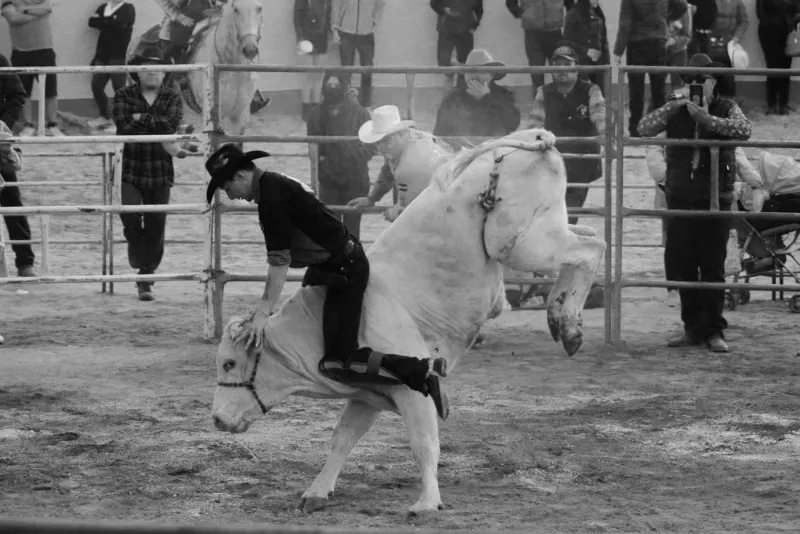
There's a moment in every rodeo — you've probably seen it if you've ever been to a county fair in Texas or Oklahoma — where everything goes terrifyingly wrong. The rider is down, the bull is loose, and the only thing standing between catastrophe and chaos is a guy in a barrel with painted-on eyebrows and oversized shoes. That guy has maybe four seconds to redirect two thousand pounds of animal fury and keep an entire arena calm at the same time.
For most people, that's a job. For Denny Halverson, it was graduate school.
Halverson spent eleven years working the rodeo circuit across the American Southwest, performing as a bullfighter and clown from dusty county fairs in New Mexico to the National Finals Rodeo in Las Vegas. He was, by all accounts, exceptional at the work — not just the physical part, but the psychological architecture of it. The way he read a crowd. The way he could defuse panic with a single gesture. The way he understood, intuitively, that laughter wasn't a distraction from danger. It was a tool for surviving it.
He enrolled in pre-med at thirty-one years old, sleeping in his truck for the first semester because tuition had cleaned out his savings. He graduated from medical school at thirty-eight. By fifty, he was running the trauma department at a major regional hospital and training emergency physicians across the country in methods that didn't come from any textbook — because he'd written them himself, drawing almost entirely from what he'd learned in the dirt.
The Audience in the Operating Room
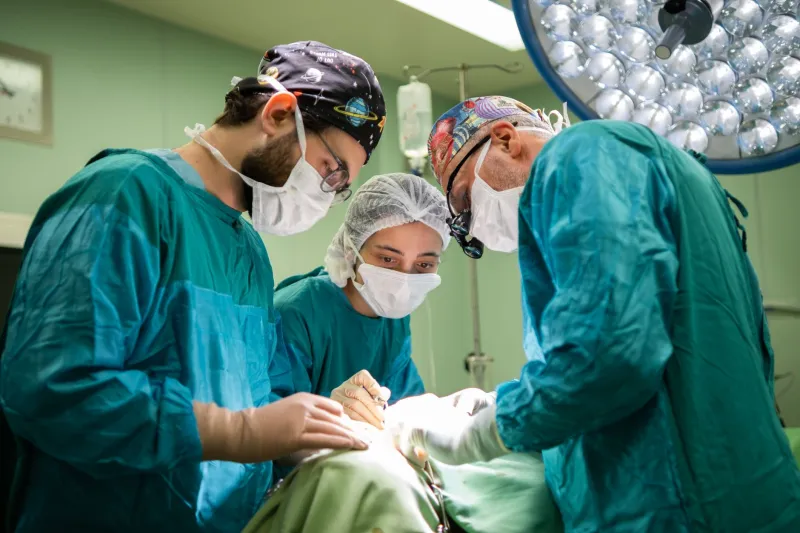
Most people don't think of an operating room as a performance space. Halverson always did.
"Every room has an emotional weather system," he told a medical conference audience in 2009, in a talk that was passed around the internet long before that was a normal thing for medical lectures. "The surgeon sets it. If the surgeon walks in tense, the nurses get tense, the anesthesiologist gets tense, and the patient — who is already terrified — picks up on all of it before they even go under."
His insight wasn't entirely new. Research into surgical team dynamics had been building since the 1990s, and psychologists had long known that stress was contagious in high-stakes environments. But Halverson brought something the researchers didn't have: a performer's vocabulary for changing the room.
He developed what he called the "entry protocol" — a structured but casual set of behaviors a surgeon performs in the first ninety seconds after entering an operating room. Eye contact with each team member. A specific kind of slow, deliberate movement. Sometimes a brief, low-stakes joke. Not to entertain. To regulate. To send a signal to every nervous system in the room that the person in charge was calm, present, and in control.
It sounds almost absurdly simple. It worked with a consistency that surprised even his skeptics.
Reading the Bull, Reading the Patient
Halverson was quick to point out that his rodeo career wasn't just about entertainment. Bullfighting — the American rodeo version, not the Spanish one — is a genuine athletic discipline, and the best practitioners are students of animal behavior, crowd psychology, and split-second risk assessment.
"When a bull comes out of the chute, you're reading about fifteen different signals simultaneously," he explained in a 2014 interview with a trauma medicine journal. "The angle of the head. The speed. Which direction the hips are carrying the weight. You're building a picture of what's about to happen before it happens. That's pattern recognition under pressure. That's exactly what emergency medicine is."
He brought that same observational discipline into the ER. He trained residents to walk into a trauma bay the way a bullfighter walks into a ring — scanning, reading, building a mental model before the adrenaline had a chance to narrow their focus. He called it "wide-angle attention," and he built an entire curriculum around it that's now used in residency programs in four states.
What Laughter Actually Does
The humor piece was the part that made people most uncomfortable when Halverson first started talking about it publicly. Medicine has a complicated relationship with levity. There's a long tradition of gallows humor among ER staff — a coping mechanism everyone understands but nobody discusses openly. What Halverson was proposing was something different: deliberate, therapeutic humor as a clinical tool, deployed not to cope with the work but to improve outcomes within it.
He cited research on cortisol reduction, on the physiological effects of genuine laughter on pre-surgical anxiety, on the documented impact of patient-provider rapport on pain perception and recovery times. But he also just told stories. About the time a well-timed joke had visibly relaxed a pediatric patient enough to get a clear airway reading. About the resident who'd learned to make scared families laugh — not dismissively, not inappropriately, but warmly — and whose patient satisfaction scores were consistently the highest in the department.
"In the ring, if the crowd is scared, they make bad decisions," Halverson said. "They rush the fence, they block the exits, they create secondary injuries. If you can make them laugh — just once, just briefly — you give them their bodies back. You give them their judgment back. Same thing happens in an exam room."
The Unlikely Curriculum
Halverson retired from active surgical practice in 2019, but his influence didn't retire with him. The training modules he developed are now embedded in continuing medical education programs at several major teaching hospitals. A chapter he contributed to a 2017 anthology on non-technical surgical skills is one of the most-cited pieces in the book.
He still gives talks. He still sometimes shows up to medical school orientations in a battered hat and boots, just to watch the residents try to figure out what he's doing there.
The answer, of course, is the same thing he was always doing. Reading the room. Setting the weather. Reminding a room full of brilliant, highly trained, deeply anxious people that the most powerful instrument in medicine has always been the human being holding the tools — and that how you carry yourself in a crisis matters just as much as what you know.
Eleven years in the dirt taught him that. The rest of medicine is still catching up.