Seeds of Revolution: How a Coal Miner's Son Quietly Fed America From a Borrowed Plot of Land
The Field That Changed Everything
In 1834, a young Black man named Henry Blair walked into the U.S. Patent Office in Washington, D.C., carrying detailed drawings of a mechanical corn planter that would revolutionize American farming. He couldn't read or write, but he could visualize complex machinery in ways that formally educated engineers couldn't. The patent clerk, accustomed to submissions from established inventors and manufacturers, was skeptical. How could someone with no formal training, no workshop, and no financial backing have designed something so sophisticated?
 Photo: U.S. Patent Office, via www.pinzhidisplay.com
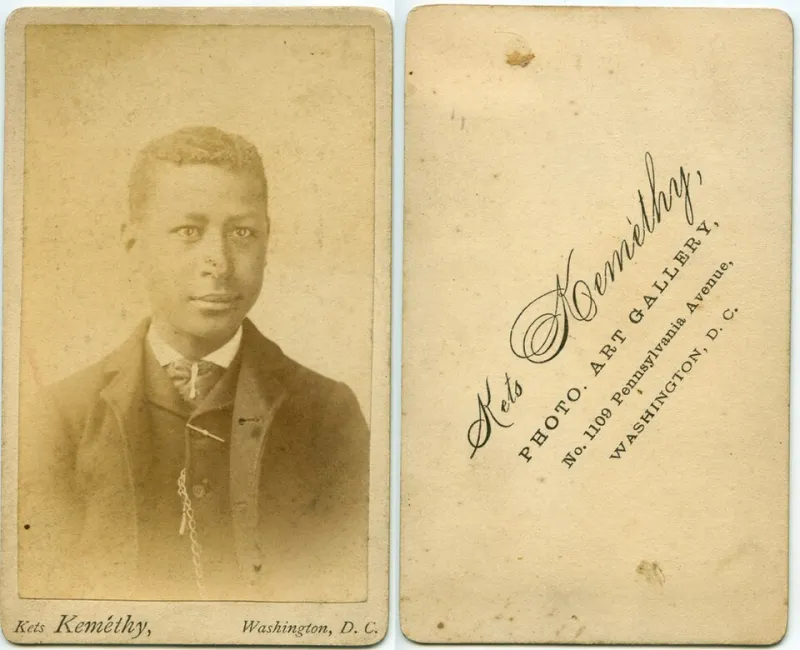
 Photo: Henry Blair, via i.pinimg.com
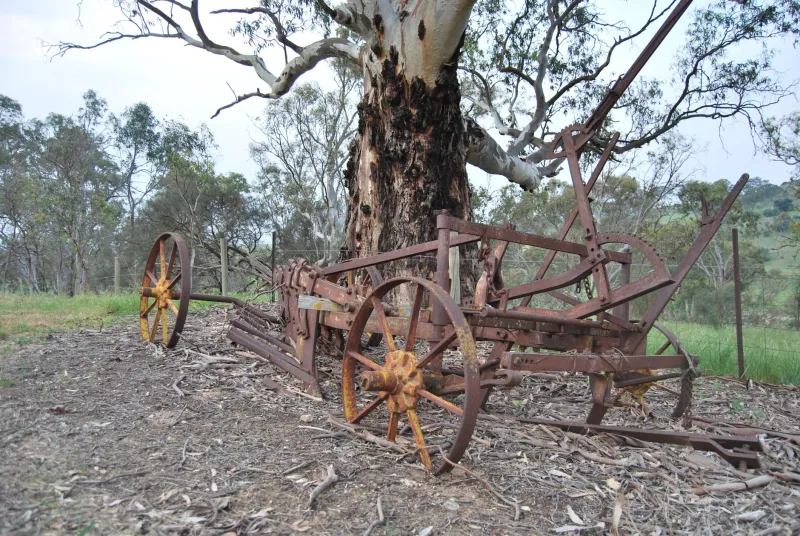
Blair's corn planter wasn't just innovative — it was necessary. American farming in the 1830s was still largely dependent on manual labor and primitive tools. Planting corn required farmers to make individual holes for each seed, a backbreaking process that limited how much land a single family could cultivate. Blair's machine could plant multiple rows simultaneously, dramatically increasing efficiency and making it possible for smaller farms to compete with larger operations.
But the most remarkable thing about Blair's invention wasn't its mechanical ingenuity. It was where it came from: a borrowed plot of land in Maryland, worked by a man who had every structural reason to fail and no institutional support for his ideas. His story reveals how some of America's most important agricultural innovations emerged not from research institutions or wealthy inventors, but from people who understood farming's daily realities because they lived them.
Growing Up in Coal Country
Henry Blair was born around 1807 in Glen Ross, Maryland, to parents who had worked their way out of slavery into the precarious freedom of rural laborers. His father spent years in the coal mines of western Maryland, coming home each night black with dust and exhausted from the dangerous work underground. The family's survival depended on a small plot of land they managed to lease, where they grew corn and vegetables to supplement the meager wages from mining.
 Photo: Glen Ross, Maryland, via m.media-amazon.com
Blair learned farming the hard way, watching his parents struggle with inadequate tools and inefficient methods. Every spring meant weeks of backbreaking work planting by hand. Every harvest meant wondering if they'd grown enough to make it through winter. The mechanical problems of farming weren't abstract engineering challenges for Blair — they were daily obstacles that determined whether his family would eat.
While other children his age were learning to read and write, Blair was studying the mechanics of agriculture. He watched how seeds fell when scattered by hand, how soil behaved under different weather conditions, how plants grew when spaced at different intervals. His education came from observation and necessity, not books and classrooms, but it gave him insights that formally trained engineers often lacked.
The Borrowed Laboratory
Blair's breakthrough came when he convinced a local landowner to let him experiment on a small section of unused farmland. The arrangement was simple: Blair could use the land for his mechanical experiments in exchange for a share of whatever he managed to grow. It wasn't much — maybe two acres of uneven ground that other farmers had given up on — but it was enough.
Working with borrowed tools and scrap metal, Blair began building prototypes of his corn planter. His design was elegantly simple: a wheeled device that would create furrows, drop seeds at precise intervals, and cover them with soil, all in a single pass. The concept wasn't entirely new — other inventors had attempted similar machines — but Blair's version solved problems that had stymied more educated designers.
The key was his intimate understanding of how corn actually grew. While other inventors focused on complex mechanical systems, Blair designed his planter around the plant's needs. His seed-dropping mechanism accounted for different soil conditions. His furrow-making system adapted to uneven terrain. His covering mechanism ensured proper seed depth regardless of ground hardness. These weren't theoretical considerations — they were practical solutions to problems Blair encountered every planting season.
Patent Number 8447
On October 14, 1834, the U.S. Patent Office awarded Henry Blair Patent Number 8447 for his "Corn Planter." The achievement was groundbreaking in multiple ways. Blair became the first African American to receive a U.S. patent — a remarkable accomplishment in an era when most Black Americans were still enslaved and even free Black citizens faced severe legal and social restrictions.
But the historical significance of Blair's patent goes beyond its symbolic importance. His corn planter represented a fundamentally different approach to agricultural innovation. While most farm equipment was being developed by manufacturers in industrial centers, Blair's design emerged from actual farming experience. His machine worked because it was created by someone who understood not just the mechanics of planting, but the economic and practical realities of small-scale agriculture.
The patent description, dictated by Blair to a clerk since he couldn't write, reveals the depth of his mechanical thinking. Every component of the planter was designed with multiple functions. The wheels that moved the machine also powered the seed-dropping mechanism. The weight distribution was calculated to ensure proper furrow depth without requiring excessive pulling force. The seed containers were positioned to maintain consistent flow regardless of the machine's angle on sloped ground.
The Cotton Revolution
Blair's success with the corn planter led to an even more significant innovation. In 1836, he received a second patent for a cotton cultivator — a machine designed to break up soil around growing cotton plants and remove weeds without damaging the crop. This invention addressed one of the most labor-intensive aspects of cotton farming and helped make cotton cultivation more efficient for smaller farmers.
The cotton cultivator was particularly important because it democratized cotton farming. Before Blair's machine, effective cotton cultivation required either large numbers of workers or expensive specialized tools that only wealthy planters could afford. Blair's cultivator could be operated by a single person and was simple enough to be built and maintained by local blacksmiths.
The impact of Blair's cotton cultivator extended far beyond individual farms. By making cotton cultivation more accessible to smaller farmers, his machine helped spread cotton production across a wider geographic area and contributed to the crop's economic importance in the decades leading up to the Civil War. The efficiency gains from Blair's cultivator helped establish cotton as America's most valuable agricultural export.
The Innovation That History Forgot
Despite the revolutionary impact of his inventions, Henry Blair largely disappeared from historical records after receiving his patents. He continued farming in Maryland, apparently content to work his borrowed land and improve his machines through practical experience rather than commercial exploitation. Unlike other inventors of his era, Blair didn't establish a manufacturing company or seek to profit from licensing his designs.
This invisibility was partly by choice and partly by circumstance. As a Black man in antebellum America, Blair faced severe limitations on his ability to participate in commercial and industrial networks. Even with his patents, he couldn't easily access the capital needed to manufacture his inventions on a large scale. The very social structures that made his innovations necessary also prevented him from fully capitalizing on their success.
But Blair's low profile may also have reflected a different understanding of innovation's purpose. While other inventors sought fame and fortune, Blair seemed motivated primarily by the desire to solve practical problems. His machines weren't designed to make him rich — they were designed to make farming more efficient for people like himself, who worked small plots of land with limited resources.
The Seeds of Modern Agriculture
Today, the principles behind Blair's corn planter and cotton cultivator can be seen in virtually every piece of modern farm equipment. His approach to mechanical design — focusing on the plant's needs rather than the machine's complexity — became the foundation for precision agriculture. His understanding of how to balance efficiency with simplicity influenced generations of agricultural engineers.
More importantly, Blair's story illustrates how innovation often emerges from the margins rather than the center. While established institutions were focused on incremental improvements to existing methods, a coal miner's son working borrowed land was developing the radical solutions that American agriculture actually needed.
Henry Blair's legacy lives on in every mechanically planted field, in every efficiently cultivated crop, in every small farm that can compete with larger operations because of better tools. His inventions helped feed a growing nation and established principles of agricultural efficiency that continue to shape farming today.
His story reminds us that the most important innovations often come from people who understand problems intimately because they live with them daily. Sometimes the best solutions emerge not from research laboratories or corporate boardrooms, but from borrowed plots of land worked by people who have everything to gain and nothing to lose by thinking differently.