Stitching the Impossible: How Factory Seamstresses Hand-Built America's Journey to the Stars
When Rocket Science Needed a Woman's Touch
In 1959, NASA had a problem that million-dollar engineering budgets couldn't solve. They needed to build a suit that could protect a human being in the most hostile environment imaginable—the vacuum of space—and every prototype from aerospace contractors was failing catastrophically.
Then someone had an unusual idea: What if they asked the people who actually knew how to make clothes that didn't fall apart?
That's how Eleanor Foraker, a 42-year-old seamstress at the International Latex Corporation in Dover, Delaware, became the most important person most Americans have never heard of. Her team of factory workers, armed with nothing but sewing machines and generations of textile knowledge, solved problems that had stumped MIT-trained engineers.
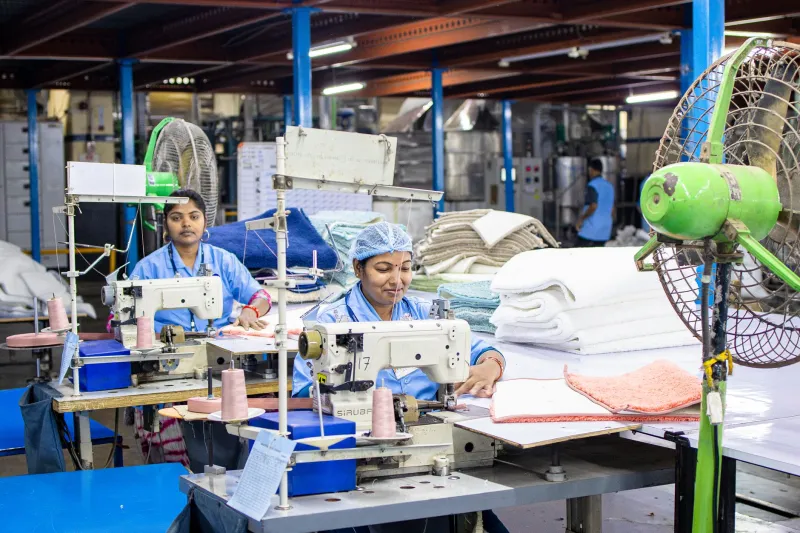
 Photo: International Latex Corporation, via 4.bp.blogspot.com
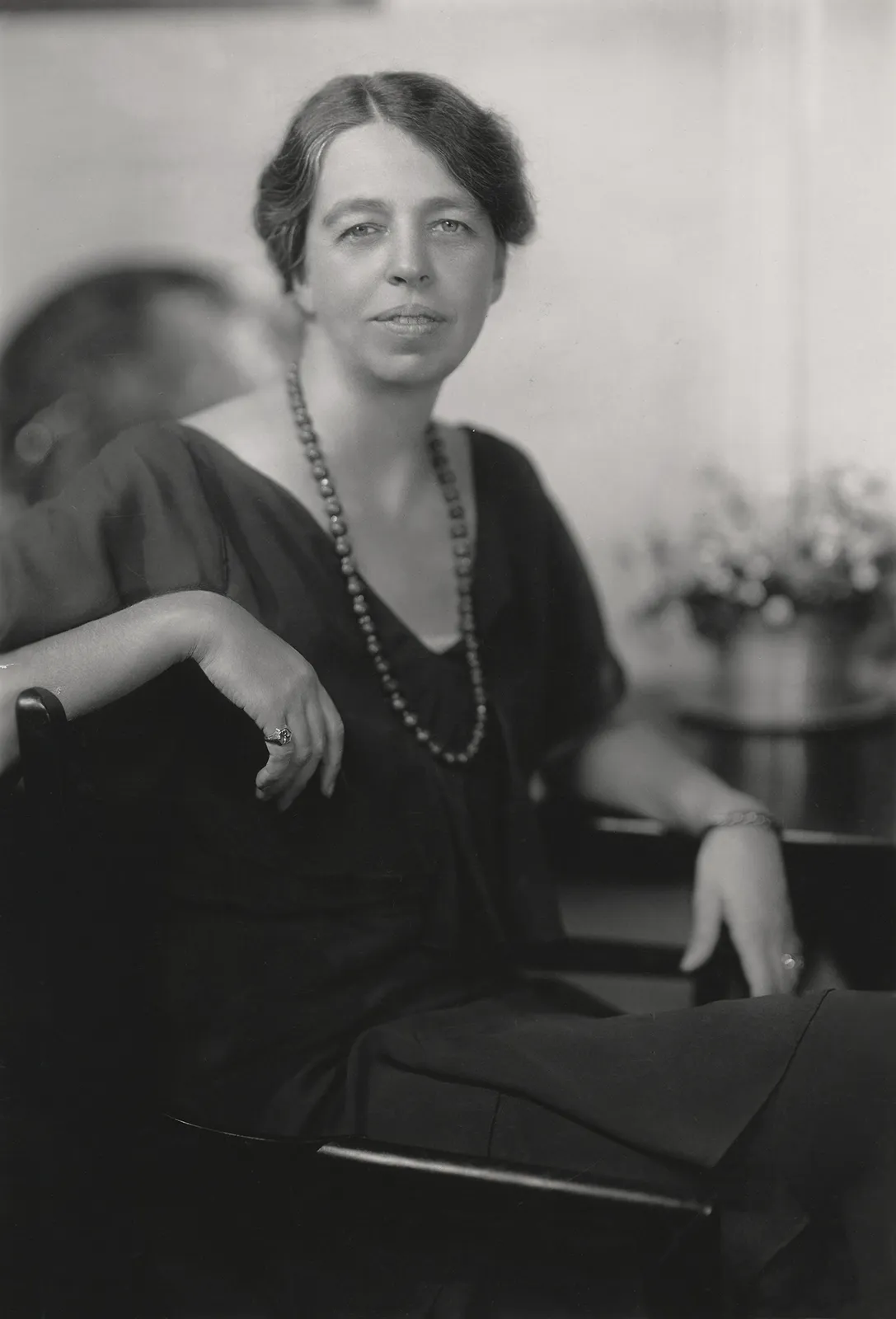 Photo: Eleanor Foraker, via images.bonanzastatic.com
The Impossible Assignment
When NASA's contract landed on Foraker's desk, the requirements read like science fiction. The suit needed to maintain perfect pressure in a vacuum, protect against temperatures ranging from 250°F to -250°F, allow precise movement for complex tasks, and never, ever fail—because failure meant death.
Oh, and it had to be sewn together by hand.
Aerospace engineers had approached the problem like they were building a tiny spacecraft. Foraker approached it like she was making the most important dress in human history. The difference in perspective would prove crucial.
Grandma's Techniques Meet Space-Age Problems
While engineers focused on exotic materials and complex systems, Foraker's team relied on techniques passed down through generations of seamstresses. They used French seams—a traditional method for preventing fabric edges from fraying—to create airtight joints that could withstand the pressure differentials of space.
They adapted quilting techniques to create the suit's thermal layers, using patterns their grandmothers might have recognized to solve heat transfer problems that had never existed before humans tried to leave Earth.
Most importantly, they understood something the engineers missed: clothes need to move with the human body, not against it. Every space suit that had failed did so because it fought the astronaut's natural movements. Foraker's team designed suits that worked with human anatomy, not despite it.
The Delaware Workshop That Built the Future
Foraker's workshop looked nothing like what most people imagine when they think of the space program. No gleaming laboratories or white-coated scientists—just a room full of women hunched over sewing machines, working with materials they'd never seen before but applying skills they'd known since childhood.
They invented new stitching patterns to join layers without creating weak points. They developed hand-sewing techniques for attaching life support connections that needed to be both flexible and absolutely secure. They created custom tools for working with materials that couldn't be pressed with traditional irons or cut with regular scissors.
Every suit was essentially custom-made, with Foraker's team taking detailed measurements and creating patterns like they were fitting astronauts for the most expensive tuxedos in history.
The Suits That Saved America's Space Dreams
When Alan Shepard became the first American in space in 1961, he was wearing a suit hand-stitched by Eleanor Foraker and her team. When John Glenn orbited the Earth, when Ed White took the first American spacewalk, when Neil Armstrong stepped onto the moon—they were all protected by garments sewn in a Delaware factory by women who learned their trade making girdles and bras.
 Photo: Neil Armstrong, via cdni-hw.ch7.com
The suits worked flawlessly. While other contractors struggled with engineering failures and design flaws, Foraker's team delivered suits that never experienced a life-threatening malfunction. Their success rate was perfect—literally a matter of life and death, achieved through careful handwork and attention to detail.
The Recognition That Never Came
Despite their crucial role in America's space program, Foraker and her team received little public recognition. NASA's publicity focused on astronauts and mission control, not the seamstresses who made it all possible. No patents were filed in their names, no awards were given, no streets were named after them.
Foraker herself seemed content with the anonymity. In rare interviews, she spoke about the work with the matter-of-fact pride of a craftsperson who knew she'd done her job well. "We just made clothes," she would say, as if keeping humans alive in space was simply another day at the office.
The Legacy Hidden in Plain Sight
Today's space suits still use techniques pioneered by Foraker's team. The International Space Station, SpaceX missions, and future Mars expeditions all rely on construction methods developed by women who learned to sew making everyday clothing.
Their story reveals something profound about innovation: sometimes the most advanced solutions come from the most traditional knowledge. While engineers were trying to reinvent clothing from scratch, seamstresses simply adapted techniques they already knew to solve new problems.
Threads of Ingenuity
Eleanor Foraker's legacy isn't just in the suits she made—it's in what her story tells us about expertise and innovation. She proved that you don't need advanced degrees or high-tech laboratories to solve complex problems. Sometimes you just need deep knowledge of your craft and the confidence to apply it in new ways.
In an era when we often assume technological progress requires throwing out old knowledge, Foraker's team showed that the future is sometimes built by combining ancient skills with new challenges. They didn't just stitch together space suits—they wove together tradition and innovation, creating something that was both timeless and revolutionary.
Every time humans venture into space, they carry with them the invisible legacy of a Delaware seamstress who understood that the most important technology is often the simplest: careful hands, proven techniques, and the knowledge that some things never go out of style.